Goal is to fight leukemia and lymphoma resistant to chemo and radiotherapy
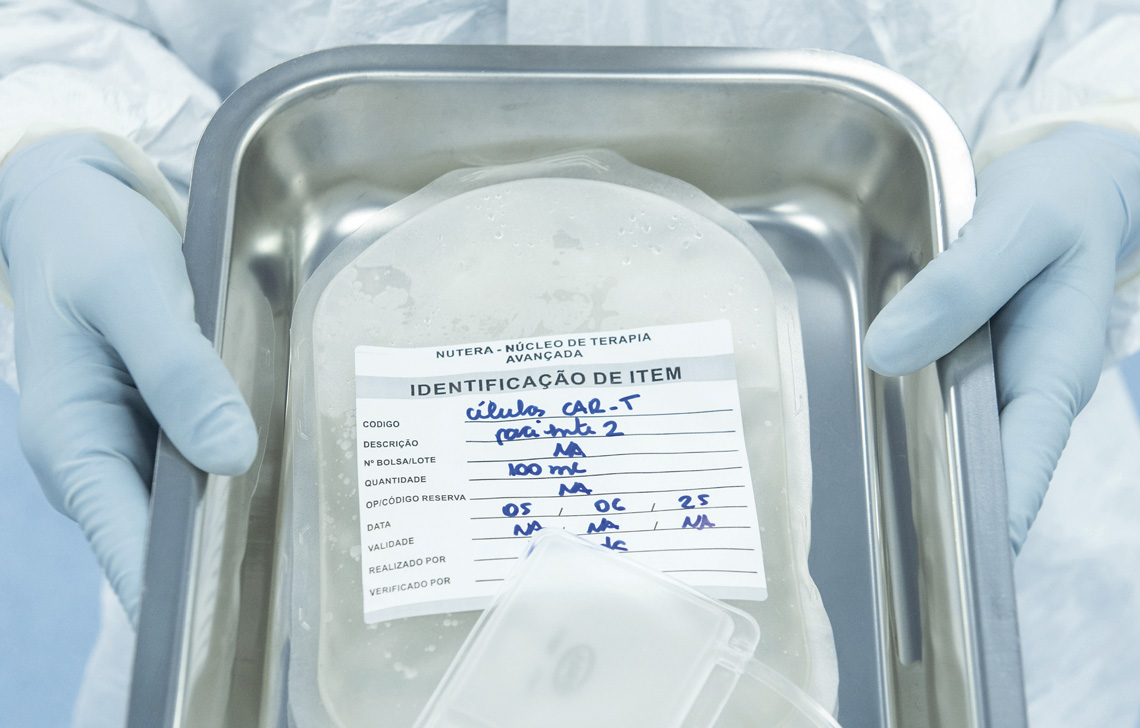
IV bag used during preparation of CAR-T cells
Léo Ramos Chaves / Pesquisa FAPESP
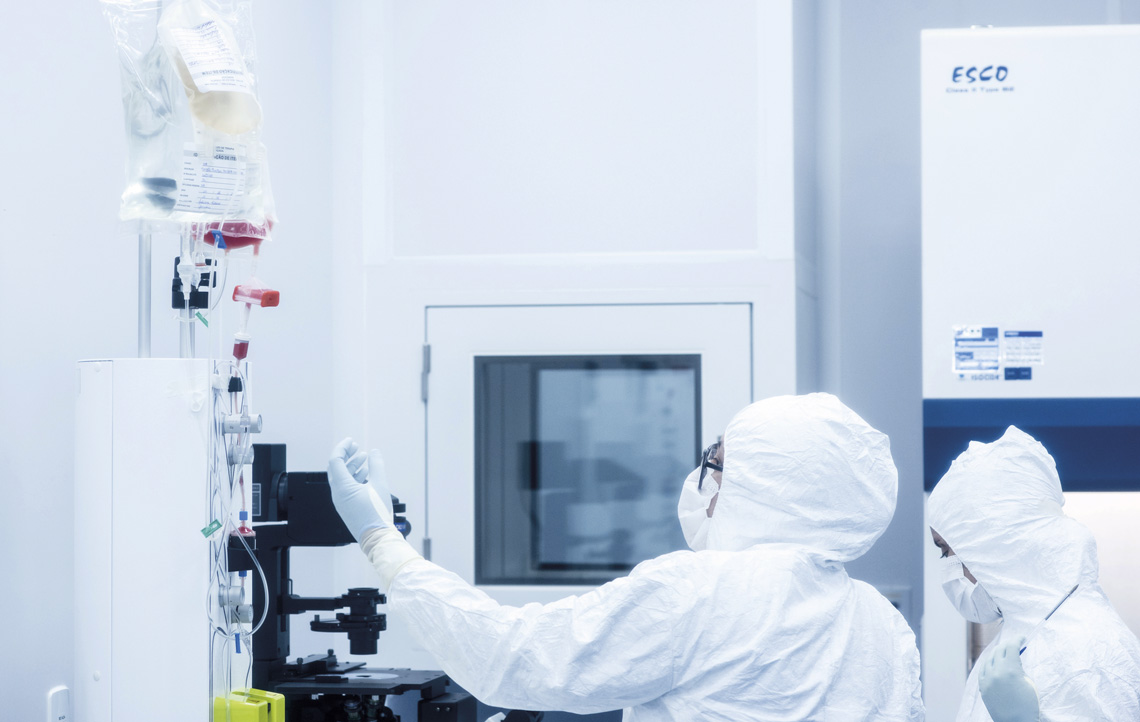
Every so often, biomedical scientist Renata Nacasaki Silvestre would look at the suspended plastic IV bags on a stand—one containing a bright red liquid, another with an amber-colored solution, and the third filled with a colorless fluid. She then measured readings on the apparatus in front of her, making notes on a clinical chart. Beside her, pharmacist Elaine Zayas Marcelino kept an eye on the room’s air purity conditions. They would follow a strict procedural sequence that they knew by heart for each measurement, but even so, there were checks at every step. It was a little past 2 p.m. on that Thursday, June 5, and the pair was finishing up the work they had begun early that morning: separating a special type of defense cell from a mix of blood cells—the T lymphocytes, later to be modified to function as a live medicine against cancer in the most comprehensive ongoing patient trials ever conducted in Brazil.
The red bag—the most important and delicate—had arrived in Ribeirão Preto the previous night. Its 400-mililiter capacity held blood cells from a patient with lymphoma, a type of blood cancer, being treated at the Beneficência Portuguesa (BP) Hospital of São Paulo. The material, collected in the state capital, traveled 350 kilometers (km) to the Ribeirão Preto Regional Blood Center, associated to the University of São Paulo (USP), for a special reason. For a little over three years, the USP campus has been home to the Ribeirão Preto Advanced Therapy Unit (NUTERA-RP), Latin America’s biggest center specializing in the production of genetically modified T lymphocytes to target tumor cells known as CAR-T (T lymphocytes with chimeric antigen receptors).
That afternoon, at one of the laboratories in the “factory,” as NUTERA is known, Silvestre and Marcelino were concluding the first of four key phases to produce CAR-T cells (see infographic). As it flowed from the bag to the apparatus, the red fluid blended with antibodies containing a magnetic particle, designed to adhere to the T lymphocytes, a varied family of defense cells—some act directly and destroy diseased or pathogen-infected cells; others send the attack order to the other immune cells; and there are yet others that function as a living memory of the target to be eliminated.
Alexandre Affonso / Pesquisa FAPESP
Once marked, the lymphocytes would pass through a magnetic field that attracted and separated them from the other blood cells. Stored in a smaller bag, they would later be taken to another room to be activated before being genetically modified. During the last and longest stage the lymphocytes, now transformed into CAR-T, would be kept for 10 days in a nutrient-rich culture at a controlled temperature to multiply until reaching the required concentration for treatment. “T lymphocytes duplicate every 30 hours,” explains chemist Amanda Mizukami, production manager at NUTERA. “The concentration used in treatments varies from hundreds of thousands to hundreds of millions, depending on the patient’s illness and weight.”
Once ready and in the appropriate dosage, the modified T lymphocytes would also undergo tests to evaluate whether they were healthy and uncontaminated, and if they were capable of identifying and eliminating the target cells. Only then, almost 45 days after collection, the T lymphocytes, now equipped with a radar that guides them to the tumor cells, would return to their donor in São Paulo.
The BP Hospital patient awaiting manipulation of their cells this past June is the sixth to be included in the biggest Brazilian clinical trial aimed at evaluating the safety and efficacy of CAR-T cells wholly developed in Brazil, with support from FAPESP: the Carthedrall Study. Initiated in 2024, the trial received R$100 million from the Brazilian Ministry of Health to treat 81 people with acute lymphoblastic leukemia or non-Hodgkin lymphoma who had not responded to previous treatments. The trial participants are being selected at BP and four other São Paulo hospitals: the University of São Paulo’s Hospital das Clínicas at Riberão Preto, coordinating the study, the University of Campinas (UNICAMP) Hospital de Clínicas, and, in the state capital, the Sírio-Libanês Hospital and USP’s Hospital das Clínicas. Anyone joining the study will receive the reprogrammed T lymphocytes and will be monitored for at least five years. “Up to June, we were refining our procedures and progressing at a slower rate than we would have liked,” says hematologist Rodrigo Calado, director of the Ribeirão Preto Regional Blood Center, associate dean of graduate studies at USP, and one of the study’s creators. “Now we can really get moving.”
The two types of cancer treated in the trial arise from the abnormal proliferation of B lymphocytes, immune-system cells responsible for the production of antibodies. The difference between one cancer and another is in the maturity stage of the affected cells. In acute lymphoblastic leukemia, the most common cancer in children and teenagers, genetic alterations cause the B-lymphocyte precursor cells to multiply uncontrollably in the bone marrow, causing intense pain and destroying healthy blood cells. With lymphoma, it is the B-lymphocytes that proliferate upon concentrating in the ganglia and lymphatic vessels distributed around the body, which become painful and swollen. In both cases, the B-lymphocytes lose the capacity to perform their normal role, and in this situation the same type of CAR-T cell is used to treat leukemia and lymphoma: T lymphocytes reprogrammed to display, on their surface, a molecule chemically attracted by the B lymphocytes. The cells reprogrammed at NUTERA present a fragment of antibody that bonds to the CD19 protein, exclusive to B lymphocytes, onto which the CAR-T cells release compounds to destroy them.
The Ribeirão Preto team was a pioneer in Latin America in offering treatment with CAR-T cells, initially in what is known as compassionate mode, when there are no more treatment alternatives. In August 2019, after five years working to master the technology, the group, coordinated by hematologist Dimas Tadeu Covas, then-director of the Butantan Institute, infused reprogrammed cells for patient Vamberto Luiz de Castro, a retired civil servant with a lymphoma resistant to the usual treatments (see Pesquisa FAPESP issue n° 286). Within weeks, the CAR-T cells eliminated the cancer, and Castro returned home, but sadly died months later after sustaining a head injury from a fall.
This promising treatment with CAR-T cells is, in fact, the result of endeavors begun way before. In the 2000s, hematologist Marco Antonio Zago and his team set up the Center for Cell-Based Therapy (CTC) at the Ribeirão Preto Blood Center, one of the first Research, Innovation, and Dissemination Centers (RIDC) funded by FAPESP. The CTC team developed and tested—including on patients—bone-marrow transplant strategies and the use of stem cells to treat certain types of serious anemia and type 1 diabetes (see Pesquisa FAPESP issue n° 135). “It took a lot of time and money to get to the current technological stage and master the use of CAR-T cells,” recalls Zago, who ran the CTC from 2001 to 2015, and is the current president of FAPESP. “That’s how science produces impactful results.”
Léo Ramos Chaves / Pesquisa FAPESPRenata Silvestre (left) and Elaine Marcelino observe the separation of a patient’s T lymphocytesLéo Ramos Chaves / Pesquisa FAPESP
Before moving on to the Carthedrall, the team from Ribeirão Preto provided compassionate treatment to 6 people with lymphoma and 13 with leukemia. Published in Bone Marrow Transplantation in 2024, the result of these first twenty treatments helped to form the basis to apply for clinical trial authorization from the Brazilian Health Regulatory Agency (ANVISA), the national approval body for the sale of medications. Of the 13 patients with leukemia, 12 had presented some remission of the illness one month after the infusion. Two died, and four remained free of leukemia 10 months later—the article was published only a few months after the other six had been treated. In the group with lymphoma, six had shown significant regression at the end of the first month, and two were still well after the sixth month of monitoring. In this group, four patients died.
Some 75% of the twenty participants presented a mild or moderate degree of cytokine release syndrome, a somewhat expected side effect of the therapy. Cytokines are molecules that communicate between the immune system cells, with some able to directly eliminate the tumor cells. Others attract defense cells to act upon the tumor. At low levels they are a sign that the treatment is having an effect, but in large quantities they characterize the syndrome and can cause serious harm to the body.
The factory The material used in the first 10 cases was produced in a small laboratory hidden away in the labyrinthine main building of the Ribeirão Preto Blood Center. As the project progressed, the cells came to be produced in a dedicated unit: NUTERA, a three-storey building constructed at a cost of R$200 million, jointly financed by the São Paulo state government and the Butantan Institute.
Sixteen clean rooms were prepared for the different stages of CAR-T cell manufacture. The laboratories are graded at biosafety level 2 (BSL2), suitable for dealing with biological agents of moderate risk to humans and the environment (using a deactivated virus to reprogram the cells). Access to the production sector is only granted after a strict sequence of cleaning and use of full medical individual protection equipment (EPI). An initial changing room is for handwashing and dressing in medical scrubs, clean footwear, and a first pair of gloves. In the second, operatives don sterilized overalls covering the body from head to toe, and a new pair of sterilized gloves. Only then can they access the laboratory area, and to avoid contamination they must move through the stages without once going back.
“CAR-T cell therapy is not for everyone who has leukemia or lymphoma,” explains hematologist Diego Clé, head of NUTERA and Carthedrall. Treatments using antitumor medication (chemotherapy), radiation (radiotherapy), or compounds that stimulate the defense system (immunotherapy) resolved between 50 and 70% of cases of the two illnesses. When they do not work, there is still the possibility of transplanting bone marrow, an essential material for the production of immune system cells. If none of this works, the current recommendation, in Brazil and other countries, is to try CAR-T therapy.
Since 2010, when human trials began, CAR-T cells have been used in thousands of cases around the globe, with promising results—as of April this year there were just over 100 recorded in Brazil, most using commercial products (see graphs). It is difficult to gain a precise number for the total of treatments, since registration is not obligatory.
Alexandre Affonso / Pesquisa FAPESP
In the US, the Center for International Blood & Marrow Transplant Research® (CIBMTR) recorded 14,998 CAR-T cell infusions from 2016 to 2022 for different types of leukemia and myeloma. Of 6,119 lymphoma patients treated between 2017 and 2022, some 44% were still alive three years after the procedure, according to the Center’s 2024 Annual Report. In the same interval 1,148 patients with acute lymphoid leukemia received CAR-T therapy, and half or more of them remained alive three years later (see graphs). One of the world’s best-known and successful cases is that of American Emily Whitehead, the first pediatric patient to receive this type of therapy, now 13 years leukemia-free.
The US website clinicaltrials.gov reports 2,100 clinical trials with CAR-T cells for different purposes around the globe. Of these, 190 have been concluded and 185 are ongoing. In a review article published in the journal Nature Reviews Clinical Oncology in 2023, researchers from the US National Cancer Institute (NCI) assessed long-term performance recorded for clinical trials with CAR-T cells to treat lymphoma and leukemia. In the case of lymphomas, the proportion of participants in which the illness became undetectable two years after treatment varied from 28 to 68%. For leukemia, 62 to 86% presented no signs of the illness one year after the infusion.
More recently, pharmacist Eloah Suarez, of the Federal University of ABC (UFABC), analyzed the results of 46 studies, with a total of 3,421 participants. Applying a statistical technique (meta-analysis) that enables data from different studies to be combined, she found that on average, 56% of people treated with CAR-T cells to eliminate the CD19 protein remained free of the illness for some time, and almost 60% were still alive one year after treatment. “Generally speaking, these people had considerably advanced and refractory (not responding, or becoming resistant to treatment after an initial response) leukemias and lymphomas. The treatment did not always result in significant clinical benefit,” reports the researcher, who develops CAR-T cells to treat solid tumors, more common than blood malignancies.
“At the outset, more basic strategies were used to reprogram the lymphocytes. These techniques have been refined over recent years, with improved results,” says Mizukami, and part of this refinement is an outcome of treatment management. “Oncologists have learned to better control undesired effects,” explains the researcher, responsible for ensuring that Carthedrall patients receive CAR-T cells.
Alexandre Affonso / Pesquisa FAPESP
Led by Clé and Calado, Carthedrall is a phase 1 and 2 clinical trial to evaluate the safety and efficacy of CAR-T cells conceived at NUTERA and developed with the support of the Butantan Institute. On conclusion of the study, forecast for mid-2026, the data will be submitted to ANVISA. If they are similar to those from commercially available CAR-T cell treatments, and the product is approved, it will then be submitted for evaluation by the Brazilian Ministry of Health’s National Commission for Incorporation of Technologies into the Unified Health System (CONITEC). “We hope to offer this treatment via the Unified Health System [SUS],” Clé says.
Four CAR-T cell-based products are currently cleared for sale in the country. Two are for acute lymphoblastic leukemia and other lymphoma types: Kymriah, made by Swiss pharmaceutical Novartis, and Tecartus, of the American biopharmaceutical Gilead Sciences, which also produces Yescarta for lymphomas. The fourth medication—Carvykti, of the Belgian Corporation Janssen—is used against multiple myeloma, a blood cancer that leads to the multiplication of plasmacytes, cells derived from B lymphocytes. Like the CAR-T cells at NUTERA, these are expensive single-use medications—when they don’t work, the patient doesn’t benefit from a second application.
Each treatment costs between R$2 million and R$2.7 million. These amounts include neither expenditure on hospital admissions, which last at least two weeks, nor on other medications. Before receiving the CAR-T cells, the patient undergoes chemotherapy to eliminate some of the defense cells and facilitate the action of the reprogrammed ones. Kymriah, Yescarta, and Tecartus, however, are not available on Brazil’s publicly funded Unified Health System (SUS). Those in need of these medications can only gain access to them through private health plans, or by judicial means. “At NUTERA, we work to offer treatment for around R$350,000,” says Calado.
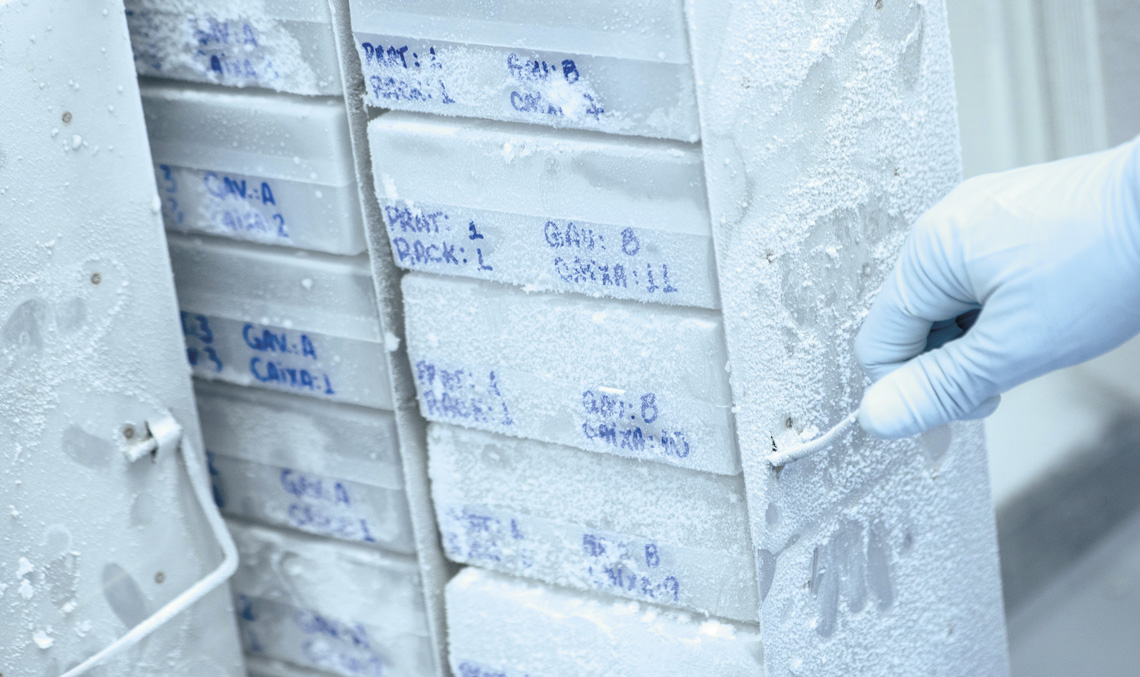
Léo Ramos Chaves / Pesquisa FAPESPFrozen samples of the virus used to transform lymphocytes into CAR cellsLéo Ramos Chaves / Pesquisa FAPESP
Providing cheaper and wider access to this type of treatment is the firm commitment of the Ribeirão Preto group and other Brazilian institutions developing their own versions of CAR-T cells as an alternative to the commercial products.
Besides NUTERA, one of the more advanced initiatives is coordinated by biomedical scientist Martín Bonamino at the Brazilian National Cancer Institute (INCA) in Rio de Janeiro, which has developed an alternative production of CAR-T cells without the need to use viruses. Mindful of the significant expense in producing viruses used to introduce genetic material into T lymphocytes to carry them in pursuit of the B lymphocytes, Bonamino and team opted to work with a transposon (jumping gene), a strain of DNA capable of inserting itself into the cell genome. The researchers couple the molecule gene that identifies the CD19 protein to the transposon, known as the Sleeping Beauty delivery method. They then apply a subtle electrical charge that opens pores in the T lymphocyte membrane, through which the gene and transposon combination penetrate.
In one of their experiments, the researchers left the CAR-T lymphocytes modified by this strategy to multiply over eight days, and used them to attack tumor cells cultivated in vitro and those from two models of human leukemia in mice. Published in 2020 in the journal Gene Therapy, the results indicate that this strategy may work: CAR-T cells eliminated both laboratory-cultivated human leukemia cells and those grafted into rodents, increasing the proportion of animals that survived.
The INCA group also went beyond: instead of waiting days for the lymphocytes to multiply in the laboratory, they injected them into the mice a few hours after they were produced. This is known as in vivo expansion, with proliferation inside the organism, and was recently tested on humans in China and the US. The new strategy works, and the treatment was as or more potent than previously, according to data published in OncoImmunology. One advantage of this option is a reduction in the risk of exhaustion of the CAR-T cells which, after multiplying several times in the laboratory, can lose the capacity of effectively acting on the patient.
“By the end of this year we will submit our authorization request to ANVISA to conduct a clinical trial with eight patients and demonstrate the feasibility of the first strategy,” Bonamino said at the beginning of July. “We have staggered production in line with the regulator’s requirements, and can generate the necessary doses.”
In Italy, CAR cells generated using transposon have already arrived at the human testing phase. Pediatrician Andrea Biondi of the Milano-Bicocca University and his team used them to treat 4 children and 32 adults with a type of leukemia. According to the results, published in the Blood Cancer Journal in April, the CAR cells multiplied rapidly after the infusion, remaining active for up to two years, and with this treatment the illness regressed in 30 of the 36 patients (83%) a month after treatment. The leukemia returned to some of them, but 20 were still living one year after the infusion. “We were able to modify the cells in one day using the transposons. We are proposing to use them as a rapid platform to test different CAR-cell formulae,” Bonamino concludes.
In addition to his research work at INCA, the biomedical scientist is part of an initiative at the Oswaldo Cruz Foundation (FIOCRUZ) seeking innovative leukemia treatments, set to benefit from a recent agreement with Caring Cross, a US-based NGO that has developed CAR-T cells to attack three targets. Signed in March 2024, the agreement provides that Caring Cross transfer materials and technology for the manufacture of CAR-T cells using viruses to the Institute for Immunobiological Technology at FIOCRUZ (Bio-Manguinhos) with authorization to commercialize the product in Brazil and other Latin American countries. The Brazilian team has already begun training, and the plan is for production in container laboratories, which will allow CAR-T cells to be manufactured in different regions. INCA and FIOCRUZ will conduct the clinical trials and apply for ANVISA approval. “If the production works we envisage the possibility of treatments for around R$200,000,” says Bonamino.
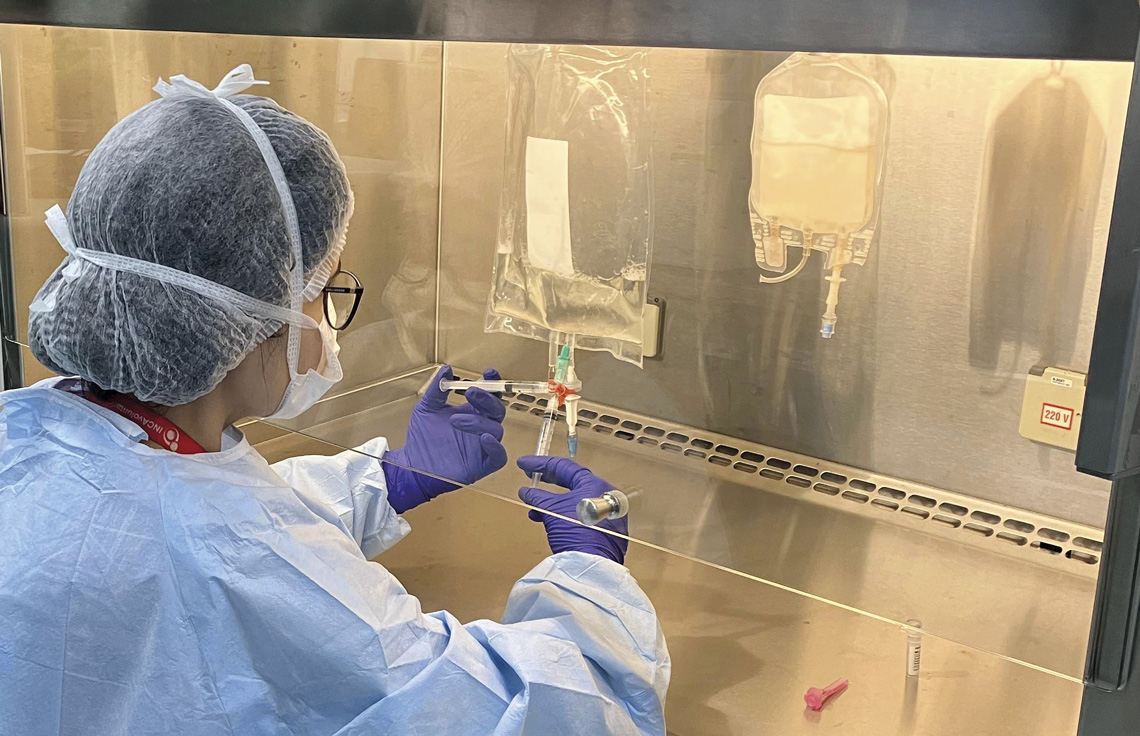
Daniela Tupy / INCA Livia Sant’Ana prepares CAR-T cells in the INCA laboratoryDaniela Tupy / INCA
A partnership with the Children’s Hospital of Philadelphia (CHOP), where Emily Whitehead was treated, is also transferring CAR-T cell production technology, using viruses in a semiautomated system, to INCA. The Institute has begun manufacture of the batches it plans to use to treat children with acute lymphoblastic leukemia in a phase-I clinical trial, whose authorization application is to be submitted to ANVISA.
The demand At Hospital Israelita Albert Einstein (HIAE) in São Paulo, hematologists Nelson Hamerschlak and Lucila Kerbauy, in partnership with other groups, tested viruses and DNA sequences created by the team to direct T lymphocytes against B on animals, and worked to modify another defense cell type (see article on page 20).
While they await the results, they have commenced human testing of CAR-T technology developed by American corporation Miltenyi Biomedicine, which aims at B lymphocyte surface targets: CD19 and CD20 proteins. Instead of assembling a complex structure like that of Ribeirão Preto, the Einstein group opted to acquire equipment from Miltenyi that produces these modified cells in a semiautomated manner in 12 days. In 2023, Hamerschlak and Kerbauy embarked upon a phase-1 clinical trial approved by ANVISA and funded by the Brazilian Ministry of Health. The goal is to treat 30 patients with lymphoma, acute lymphoid, or chronic leukemia to determine the most suitable dose for each therapy.
“We worked from 2019 to 2022 to meet all the ANVISA safety criteria to produce the cells in accordance with the protocol for good manufacture practices,” says Hamerschlak. “We treated our first 13 patients between 2023 and the beginning of July this year. Only now are we at full steam ahead,” explains the hematologist, who plans to use the Miltenyi platform to test the CAR-T cells reprogrammed by the group.
Perhaps more than one of these endeavors needs to work in order to deal with the national demand. Data from INCA estimate that every year, 12,000 new cases of lymphoma and 11,500 of leukemia emerge in the country. According to specialists, excluding cases treatable by conventional therapies, 3,500 may benefit from CAR-T cells. “We envisage that the collaborative efforts of these institutions will help CAR-T to be available on the SUS,” says Hamerschlak. “NUTERA can currently treat 100 per year,” says Clé. “With adjustments, we have the capacity to arrive at 600.”
The story above was published with the title “Made in Brazil” in issue 354 of August/2025.
Projects 1. CTC – Cell Therapy Center (n° 13/08135-2); Grant Mechanism Research, Innovation, and Dissemination Centers (RIDCs); Principal Investigator Dimas Tadeu Covas (FMRP-USP); Investment R$60,743,640.70. 2. Cell Therapy Center – NuTeC (n° 20/07055-9); Grant Mechanism Problem-Oriented Research Centers in São Paulo; Principal Investigator Rodrigo do Tocantins Calado de Saloma Rodrigues (FMRP-USP); Investment R$7,180,257.52.
This article may be republished online under the CC-BY-NC-ND Creative Commons license. The Pesquisa FAPESP Digital Content Republishing Policy, specified here, must be followed. In summary, the text must not be edited and the author(s) and source (Pesquisa FAPESP) must be credited. Using the HTML button will ensure that these standards are followed. If reproducing only the text, please consult the Digital Republishing Policy.