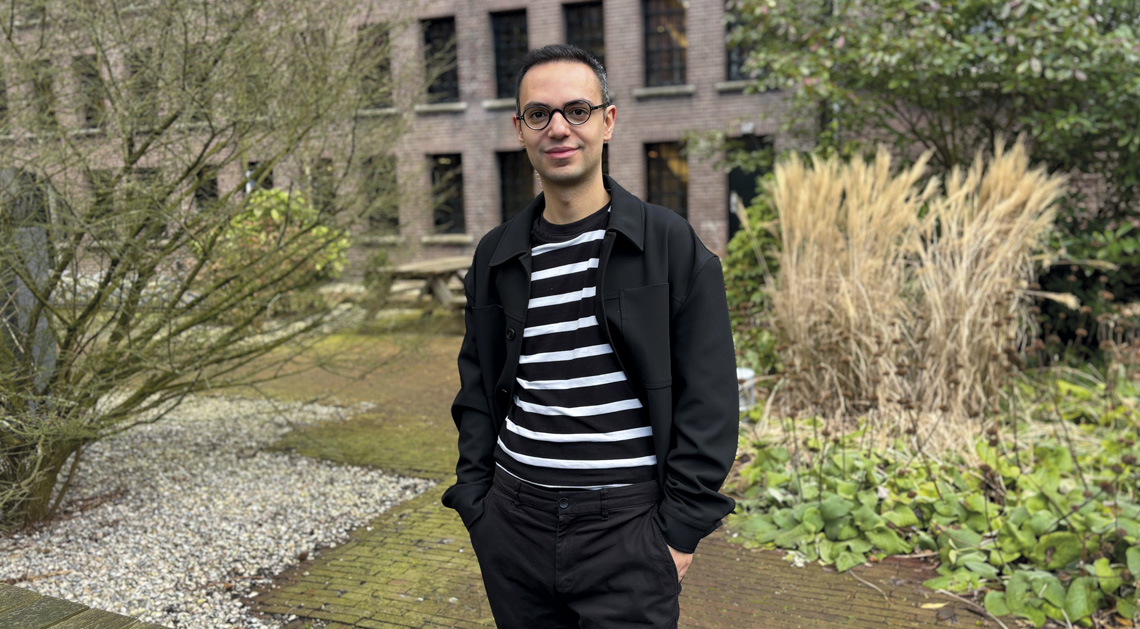
How can archival and ethnographic research be conducted when the primary sources, such as documents, photographs, and letters, are buried beneath ruins? How can we record stories and narratives when most people have migrated to other cities—or worse, left forever? When I started my PhD at the Department of History of Koç University in Istanbul, Türkiye, in 2022, my objective was to study the emigration processes of Arab Christians to Brazil in the late nineteenth century and early twentieth century. Specifically, I wanted to understand the social, historical, and cultural connections between the Antakya region and São Paulo. However, the earthquakes that hit Syria and Türkiye in February 2023, devastating Antakya, profoundly influenced the course of my work.
Before I continue, let me explain. Antakya (also known as Antioch) was founded at the end of the fourth century BC and became one of the most important cities of the Roman Empire, considered one of the cradles of Christianity. Today it is the capital of the province of Hatay, created by the Turkish state as part of an effort to integrate the region into the Republic of Türkiye, proclaimed in 1923. However, to this day, Indigenous communities often use the name “Antakya” as a synonym for the entire province of Hatay. The time period I looked at in my research was marked by political instability and conflicts in the region, which forced many families to emigrate to various parts of the world, including Brazil.
My life has also been marked by geographical changes. In the early 1990s, when I was still a baby, my parents left Ceará in pursuit of a better life in São Paulo. I grew up in the ABC region of São Paulo, close to my uncles and aunts, all of whom had migrated from the Northeast and worked together in a small family restaurant. In my early life I studied at public schools, but in high school, thanks to my mother’s hard work, I was able to attend a private school and chose to take a technical chemistry course.
Around that time, I also started studying English and Spanish on my own online. I wanted to see the world outside of Brazil. One of the tools I used was a website through which users could interact with people from different countries. It was there that I met Yalçın Kaya, a Turkish computer engineer who is passionate about the Portuguese language and Brazilian culture. We became friends and he stayed with me and my family when he later visited Brazil.
In 2009, I enrolled on the chemistry undergraduate course at the Federal University of Triangulo Mineiro (UFTM) in Uberaba. I moved to Minas Gerais, where I lived in a boarding house, but I was not happy. That same year, Yalçın’s family invited me to visit Türkiye. He arranged a part-time job for me at a call center, where I could practice my English, and enrolled me in a Turkish language course. The plan was to spend two months in the country, but the company I was working for asked me to stay permanently. Given my doubts about my vocation for chemistry and since Yalçın’s family was happy for me to stay for longer, I decided to remain in Istanbul.
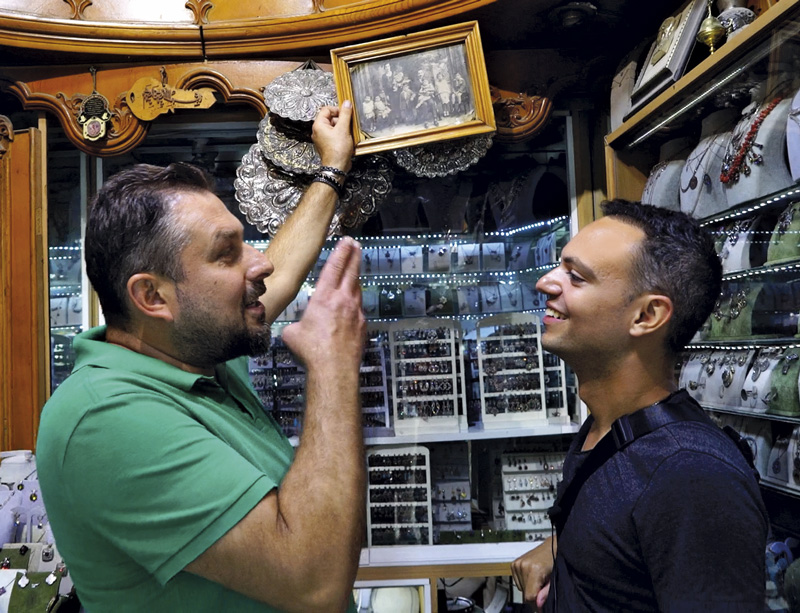
Nesime KaratekeThe researcher during field work in Turkey, last yearNesime Karateke
The Turkish language is not easy to learn, but I have an affinity for languages. In 2012, I enrolled in a sociology course at Istanbul University and the following year I was accepted onto the institution’s anthropology course. I completed both degrees in 2017 and started a master’s degree in critical and cultural studies at Boğaziçi University that same year. That is when I started studying Antakya. In my work, I investigated the sense of belonging among Arab Christian communities in the region. I lived in Antakya for over a year during my research and made many friends there.
I started my PhD in Türkiye in 2022. The following year was the major earthquake. Antakya was hit hard. Some of my friends were trapped in the rubble of their homes and almost all of them lost loved ones. More than 80% of everything I knew was in ruins. There was nothing else to do but help. With Nehna (which in English means “we”), an Antakyan organization comprised of academics, journalists, and people interested in the culture and history of the country’s Arab Christian community, I was heavily involved in campaigns to support people affected by the catastrophe.
In December 2023, I got a position as a researcher at the Department of Middle Eastern Studies of the University of Groningen, Netherlands. That is how I resumed my doctoral research, now titled “Ottoman Arab Migrations to Latin America (Antakya–São Paulo): Mapping transnational centers, networks, and cultural heritage.” I plan to complete it in 2027.
I had to expand my research due to the destruction of the city’s historic center, public and private archives, and many residential areas. Now, in addition to investigating the migration of Antakyans to Brazil in the nineteenth and twentieth centuries, I also intend to document the community’s cultural heritage, which is currently under threat. We are talking about a double risk: in addition to the devastation caused by the earthquake, the reconstruction processes managed by the Turkish government are, in my opinion, making mistakes by not taking local history into account. To this day, for example, even though the foundation that runs the Greek Orthodox Church of Antakya has the necessary resources, it has not been authorized to begin rebuilding its temple, one of the most important religious heritage sites of the Arab Christian community.
As part of my fieldwork in Türkiye, I have connected with Arab Christian families displaced after the earthquakes, conducting interviews and collecting personal documents, such as photographs salvaged from the rubble. Some of the partial results of my research include two articles I wrote for the book Post-Earthquake Antakya: Testimonies, Heritage, and Future. The book was released in Türkiye in February to mark two years since the tragedy, and is the result of a partnership between Nehna and Istos, an independent publishing house linked to the Greek community in Istanbul. I am one of the editors, together with Koç University researcher Anna Maria Beylunioğlu.
In April, I am going to São Paulo for another stage of my fieldwork. I plan to visit families of descendants from Antakya, as well as institutions such as the São Paulo State Public Archive and the Antakyan Society of Brazil. I have never lost my connection with my country and my family. After learning the Turkish language, I started translating the works of Turkish authors into Portuguese. At the moment, in partnership with Nadia Duarte Marini, a Brazilian psychologist from the organization Doctors Without Borders, I am translating Dawn, a novel by Turkish writer Sevgi Soysal [1936–1976], whose work denounced the horrors of the military dictatorship in Türkiye in the 1970s. The book is set to be released soon by Tabla, a publisher in Rio de Janeiro. I cannot wait!
Republish