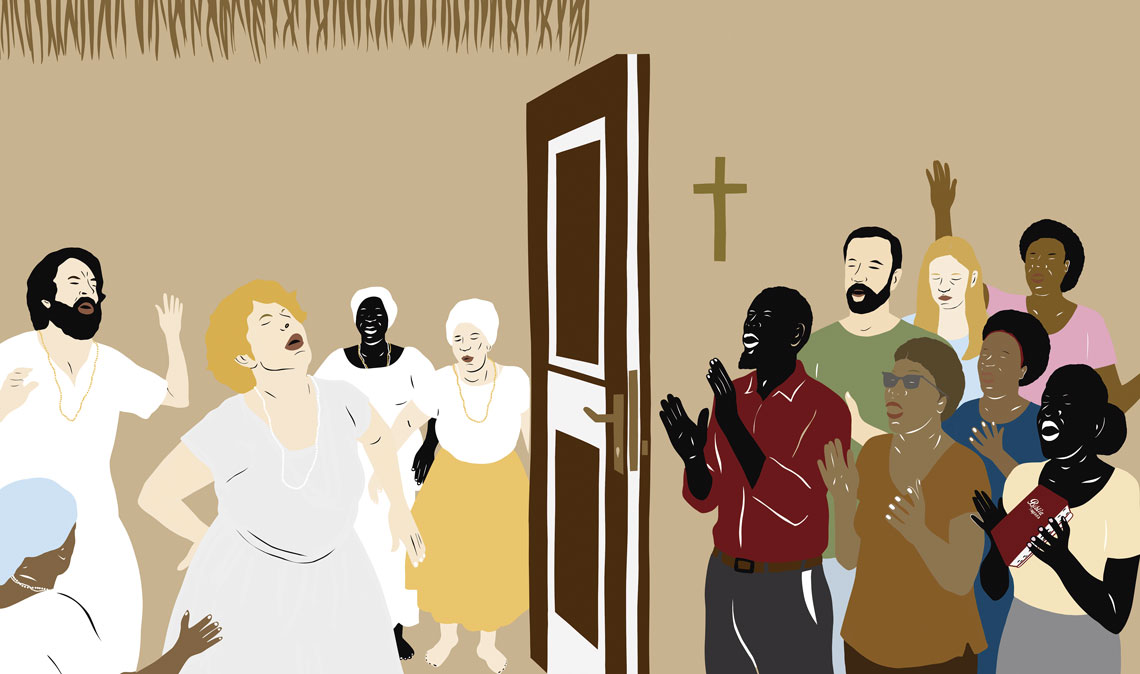
Over the past two decades, religious traditions in Brazil have increasingly begun to address issues related to race and gender. Catholic churches and evangelical temples in particular have begun hosting congregations that blend spirituality with affirmations of identity, reclaiming the presence of Black figures in Christian history and proposing new interpretations of the Bible. Gender issues, meanwhile, are being addressed from a number of perspectives: some religious groups defend the right to abortion, while others reject feminism yet still question traditional models of female subjugation. One thing these initiatives have in common is that they involve disputes about the body, sexuality, and the interpretative authority of sacred texts.
According to the 2022 Demographic Census by the Brazilian Institute of Geography and Statistics (IBGE), Brazil remains a predominantly Catholic country (56.7%), although that percentage has decreased since 2010, when it was 65%. In the same period, the proportion of people who self-identify as evangelical grew from 21.6% to 26.9% and those with no religion increased from 7.9% to 9.3%. Followers of Umbanda and Candomblé rose from 0.3% to 1.0%, while adherents of Spiritism fell from 2.1% to 1.8%.
According to anthropologist Paula Montero of the School of Philosophy, Languages and Literature, and Humanities at the University of São Paulo (FFLCH-USP), debates about race and gender among religious groups gained momentum after Brazil’s 1988 Constitution was instituted. “Until then, the country was thought of as a homogeneous, Catholic, and predominantly White nation.” With the return to democracy, the new Constitution proposed a rupture: Brazilian democracy would be pluralist,” says the researcher, who leads a thematic project on religious pluralism with funding from FAPESP. The change, she notes, resulted from wide-ranging social mobilization, representing a major shift in the way religions handle discussions about racism and misogyny.
In his 2024 book A cor da fé: “Identidade negra” e religião (The color of faith: “Black identity” and religion), USP anthropologist Rosenilton Silva de Oliveira examined how the notion of Black identity is used by leaders of religions of African origin, Catholicism, and evangelicalism. Oliveira explains that whether through new interpretations of the Bible in evangelical services or the incorporation of Afro-Brazilian elements into Catholic Mass (including the use of drums), religious groups have been debating Blackness and supporting the formulation of affirmative action for the Black population.
The book, published by Elefante, is the result of a study that made use of census data, participant observation, more than 60 interviews with spiritual leaders and followers, bibliographic reviews, documentary research, and monitoring of social networks. “Even though race is a common thread for many religious groups, each adopts its own distinct strategies to incorporate the discussion into its rites and liturgies,” says Oliveira.
The Brazilian Catholic Church, he notes, began considering the demands of the Black movement in the late 1970s, motivated by the political liberalization process and preparations for the 1979 Episcopal Conference of Latin America, held in Puebla, Mexico. The event brought together bishops from across the region to discuss evangelization efforts. One outcome of the meeting was the creation of the Black Pastoral Agents in 1983 and later, in 1988, the Afro-Brazilian Pastoral Ministry. These pastoral actions are organized by the Church to fulfill its mission of evangelizing people.
In the 1990s, theological study groups emerged, such as Atabaque in São Paulo, developing new liturgies (rites, ceremonies, and services) that encompassed racial issues. An important milestone in this process was the 1988 Fraternity Campaign, which made the Black population its central focus. Held every year by the Catholic Church, these campaigns aimed to encourage a sense of charity, solidarity, and justice through reflection on a social topic. “This year’s campaign led Catholics to acknowledge the historical complicity of sectors within the institution with slavery and to recognize the need for reparations. In 1992, Pope John Paul II [1920–2005] apologized for the Church’s involvement in the trafficking of enslaved people,” explains the anthropologist.
 Mayara Ferrão
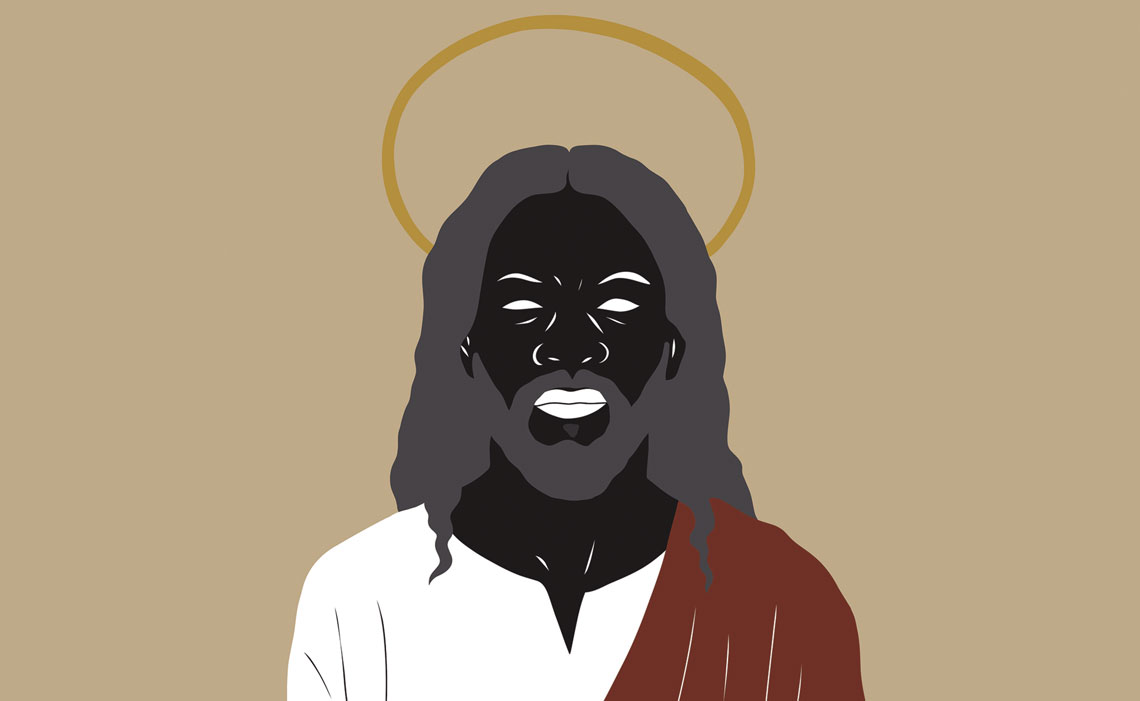
Oliveira notes that the Brazilian Catholic Church has since expanded its fight against racism and adopted symbols of African heritage in its liturgies. The goal is to expand its reach, acknowledge the Black identity of its followers, and foster dialogue with adherents of Candomblé and Umbanda. He points out, however, that the way each parish or diocese tackles the debate is not homogeneous—not all of them exhibit the same level of engagement. The Catholic Charismatic Renewal, for example, a movement that emerged in the USA in 1967 and spread worldwide, does not openly discuss antiracism or advocate for affirmative action policies, even to this day.
Before the Second Vatican Council, held between 1962 and 1965 to discuss the renewal of the Church, many religious orders did not admit Black people, Oliveira points out. Even those who did placed restrictions on them. Black people were relegated to the role of oblates, performing manual work and services. The so-called choristers, who were White, performed teaching, nursing, and liturgical duties.
The anthropologist cites a historical example to illustrate this exclusion. “St. Martin de Porres [1579–1639], a Black friar born in what is now Peru, was admitted to the Dominican order as an oblate, working as a cook and a porter, and never performed the function of a chorister,” he says. Porres joined the order of his own free will and was known for his humility, dedication to work, and charitable spirit. He was known for healing the sick and performing miracles. He was only canonized in 1962, however, by John XXIII (1881–1963), the same pope who convened the Second Vatican Council.
Founded in Campinas, São Paulo State, in 1928, the Congregation of the Missionary Sisters of Jesus Crucified is regarded as one of the first Brazilian orders to admit Black women. Letícia Aparecida Ferreira Lopes Rocha, who has a bachelor’s and master’s degree in religious studies, is currently conducting doctoral research at the Federal University of São Paulo (UNIFESP) with funding from FAPESP, exploring the history of this religious organization. Rocha was a nun for 10 years before entering academia, led to scientific research by a desire to understand and investigate the experiences of Black women in Catholicism.
By analyzing historical and ecclesiastical documents and interviews with Black nuns who are part of the organization, Rocha discovered that before the Second Vatican Council, Black women and White women were separated. The former performed domestic duties only, while the latter held prominent roles—in leadership, for example. “The distinction was only eliminated after the Second Vatican Council, which forced the Church to rethink its place in the world and to confront the contradictions of its past, especially in terms of race,” she explains.
In the 1980s, the Black sisters began reclaiming their narratives within the religious organization and holding gatherings with women from other religious orders to discuss topics such as racism and homosexuality. These events were starting points for the congregation to establish missions in Kenya, Angola, and Mozambique, extending the evangelization of Black people beyond Brazil and reinforcing the Church’s presence in Africa.
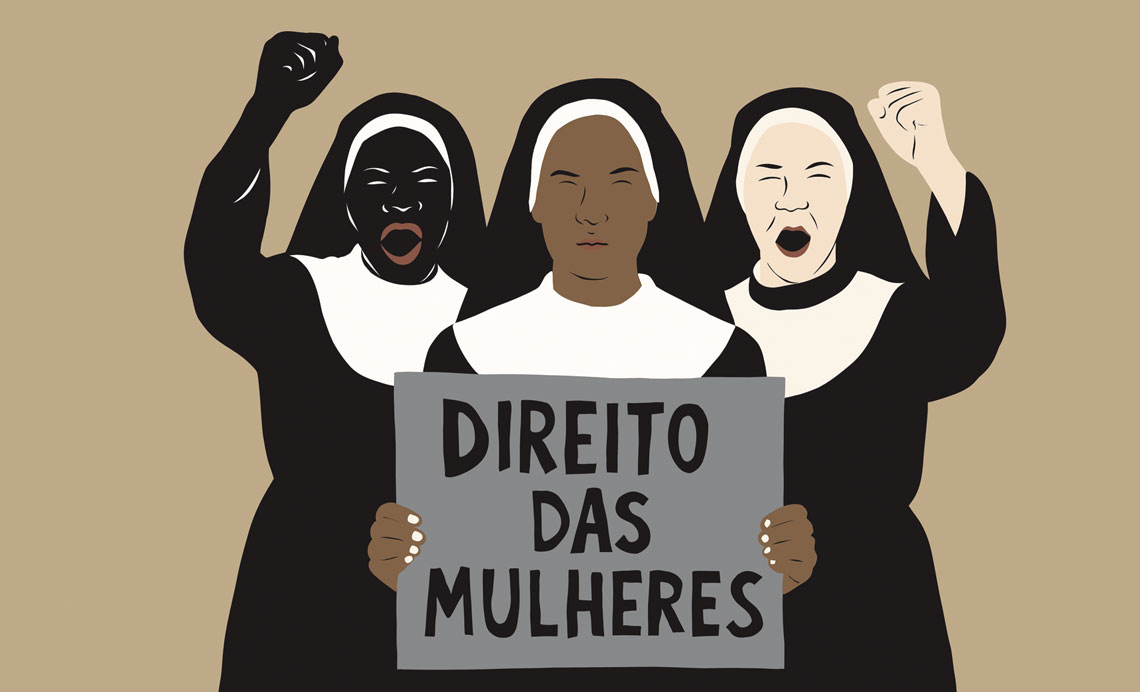
While acknowledging the Catholic Church’s recent progress in combating racism and misogyny, sociologist Maria José Fontelas Rosado Nunes of the Pontifical Catholic University of São Paulo (PUC-SP) points out that exclusion based on gender and race remains a problem for the institution. “Now there are Black bishops and cardinals, but nobody of African origin has ever been pope and women are still prohibited from holding the position. They are also not able to become bishops, priests, or hold other leadership roles,” she emphasizes. According to Nunes, the only exception—considered merely a legend by the Catholic Church—was Pope Joan, a woman who lived in what is now Germany in the eleventh century, who is said to have disguised herself as a man to study and ascend within the Church.
Before becoming a researcher, Nunes was also a nun for more than a decade. She taught at religious schools run by female congregations and worked in impoverished rural communities in the states of Bahia and Acre. She then abandoned her religious life to enter academia, focusing on how the Catholic Church deals with gender issues. She is one of the founders of the organization Catholics for the Right to Decide, created in Brazil in the 1990s to defend the autonomy of women without breaking with Christian tradition. “We have shown that it is possible to maintain faith in the Church while also questioning ecclesiastical laws on abortion, reproductive rights, and women’s autonomy over decisions involving their own bodies,” she explains. Nunes argues that the Brazilian feminist movement has historically overlooked religious women, including nuns and believers of Catholicism. “Our job is to fill that gap and build bridges, empowering them to make decisions without abandoning Catholicism,” says the sociologist.
 Mayara Ferrão
Unlike in the Catholic Church, where Black movements gained traction in the late 1980s, the phenomenon is more recent among evangelicals in Brazil, having accelerated since the turn of this century. Previously, the dominant discourse was universalist, defending the equality of all before God and treating racial discrimination as simply another sin,” explains USP’s Oliveira. According to the anthropologist, small autonomous communities were the first to define themselves as antiracist and inclusive. In 2003, they created the Black Evangelical Movement (MNE), which began organizing itself through online communities and promoting in-person meetings. Today, the movement connects organizations and pastoral and ecclesiastical leaders in 10 states across Brazil, who work together to tackle racism inside and outside churches.
The movement, according to Oliveira, is heterogeneous. It seeks to recover the African roots of Christianity, highlighting the history of Black biblical figures and their importance to the faith, while also confronting racism within and outside the Church. As an example, he cites the work of Hernani da Silva, founder of the Quilombo Missions Cultural Society in São Paulo and the Afrokut website. “Silva argues that the genesis of Brazilian Protestantism dates back to 1841 and the work of the preacher Agostinho José Pereira, known as Black Luther, in Recife,” says the anthropologist. This contrasts with the traditional narrative, which credits the spread of evangelicals in Brazil and the rise of Protestant churches in the nineteenth century to the work of European missionaries, especially Germans.
In this context, census data from recent decades reveal an intriguing pattern: while White people have a significant presence in religions of African origin, people who self-identify as multiracial are the majority among evangelicals (see graph below). Reginaldo Prandi, a sociologist from USP, notes that according to the 2022 census, there has been a significant change in the racial composition of Brazilian evangelicalism. He highlights that in the last 12 years, the number of Black evangelicals has increased by 7.2%, which is a higher rate than the growth of the country’s Black population as a whole. From the sociologist’s perspective, the data reflects a broad cultural transformation in how people have come to identify and recognize themselves in terms of race.