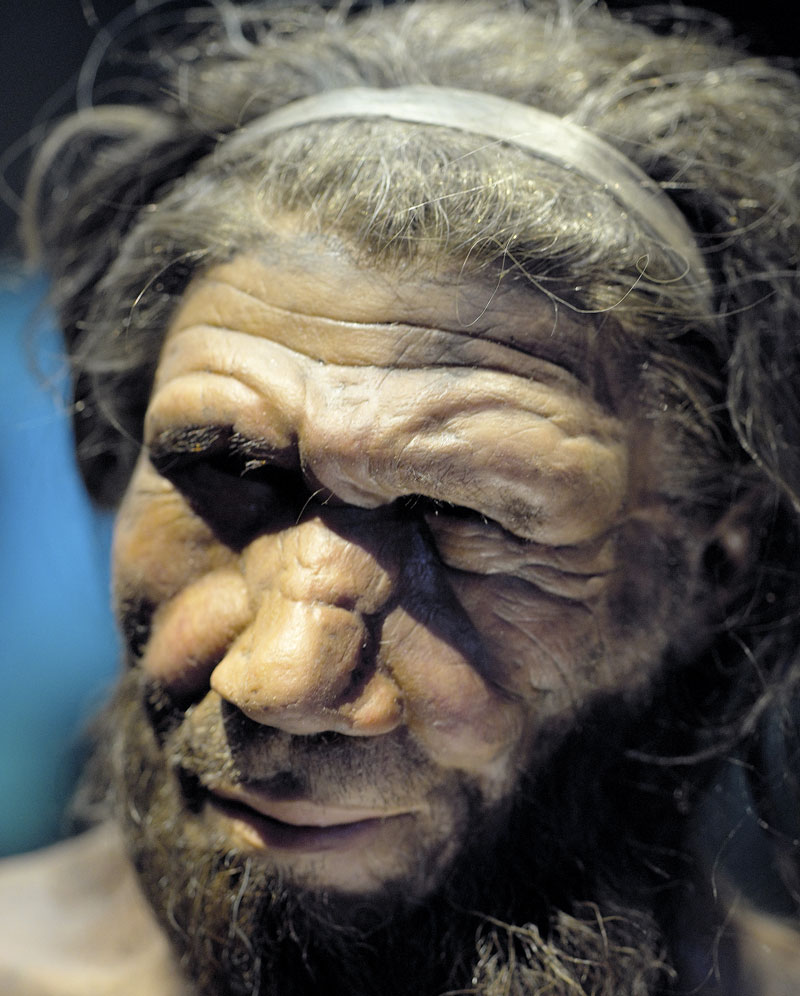
Werner Ustorf / Wikimedia CommonsRepresentation of a Neanderthal who lived in present-day Belgium 40,000 years ago, displayed at the Natural History Museum in LondonWerner Ustorf / Wikimedia Commons
Neanderthals may have been wiped out due to difficulties coping with severe climate change or because of wars with a related species—our species, the Homo sapiens. We do not know for sure. Researchers from the Autonomous University of Barcelona and the Complutense University of Madrid, both in Spain, suggested another possibility: Neanderthals may have gone extinct as a consequence of a dramatic decline in their genetic diversity. The so-called genetic bottleneck, which can inhibit reproduction to the point of reducing population size or even eliminating a species, was identified through variations in ear canal shapes in fossils from Europe and Asia, as well as from modern humans. The study observed variations in ear structure shape and composition associated with a population decline that occurred roughly 40,000 years ago, when the Neanderthals disappeared. “The development of the inner ear structures is known to be under very tight genetic control, since they are fully formed at the time of birth,” Rolf Quam of Binghamton University in New York, one of the study authors, told the website ScienceAlert (Nature Communications, February 20).
Republish