


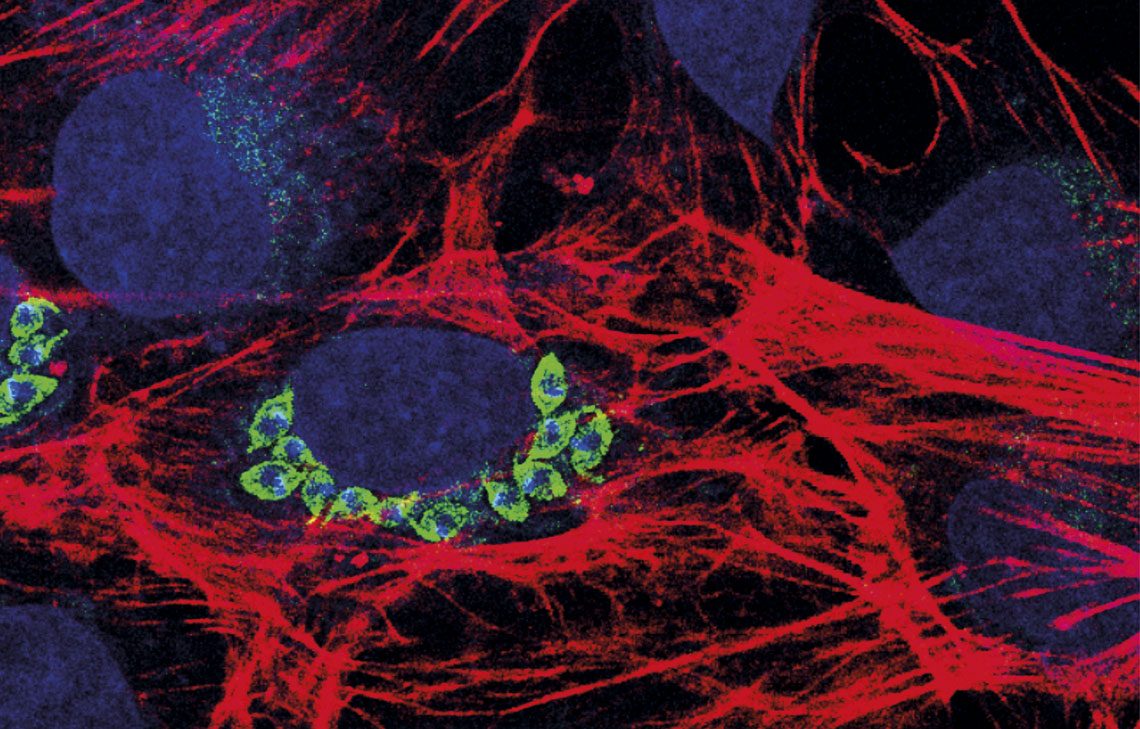
When they invade human heart cells (cardiomyocytes), the parasites that cause Chagas disease (Trypanosoma cruzi, shown in green) cluster around the nucleus (in blue). These clusters are “nests,” according to biologist Nadjania Saraiva. Her research involves introducing genetic modifications into these unicellular organisms to block the secretion of vesicles that enable them to enter cardiomyocytes. Without this experimental treatment, the nests would be far more populous, preparing the pathogens to later spread through the bloodstream. It is one of several approaches being explored in the search for molecular targets that could be used to develop a vaccine for the disease.
Image submitted by Nadjania Saraiva, a postdoctoral researcher at the Federal University of São Paulo (UNIFESP)
Republish