
Precision medicine was born out of human genome sequencing and is not a luxury—on the contrary, it enables more accurate diagnoses of some diseases and better and safer medication planning. It is good for the health care system, helping reduce wastage of resources on ineffective procedures, and it is good for patients, who receive the treatment that works best for them, with fewer side effects. However, Brazil suffers from a shortage of the biological parameters needed to know which genetic variants cause which diseases in the country because the sequences used as international references were mostly obtained from people of European descent in the Northern Hemisphere.
The focus on local and regional diversity is not parochialism. Although most of the genome is common to all people, specific modifications can make a significant difference in how genes function, and if defective, they can cause diseases (see Pesquisa FAPESP issue n° 330). It is therefore crucial to understand the genetic composition of the Brazilian population, which is why the Department of Science and Technology (DECIT) at Brazil’s Ministry of Health is now creating the National Genome and Precision Medicine Program: Genomas Brasil. In addition to examining Brazilian DNA (see report on page 12), it encompasses other projects, including Genomas SUS, through which several universities are evaluating the impact of the genome on health.
– European father, African or Indigenous mother
Started in April 2024, the project aims to sequence the complete genomes of 21,000 Brazilians by November. The goal is to reach 80,000 genomes over the next three years, ensuring the ability to sample a high diversity of ancestries. Additionally, FAPESP has announced a call for proposals to fund the sequencing of an additional 15,000 samples. The aim is to select smaller projects from among scientists who are not currently participating in Genomas SUS. “The foundation will provide a counterpart to the national research,” explains Dr. Leandro Machado Colli of the Ribeirão Preto School of Medicine at the University of São Paulo (FMRP-USP), coordinator of the project. “Samples can be collected anywhere in Brazil, as long as the researchers are based in São Paulo.”
He explains that the strategy adopted by Genomas SUS is to use short-read sequencing, which involves reading the genome from short sections of 150 base pairs, a more cost-effective method. With more complete sequencing to ensure context, the benefits are tangible. “Of the 21,000 samples we already have, we will sequence 200 using long-read technology as a more accurate point of reference,” says the researcher. Long-read sequencing uses larger sections containing hundreds of thousands of base pairs. In the effort to identify genes linked to diseases, determining the ancestry of each section of the patient’s DNA is essential. “We will then know what a certain piece of genetic material in a certain geographic location might say about a person’s health.” The reason is that with sequencing—even the least precise form—it is possible to identify the locations of altered variants on each chromosome and to potentially link them to a propensity for diseases associated with them.
To ensure that the diversity born from interracial mixing is properly represented, Genomas SUS has nine anchor centers across the country: two of them are in São Paulo, and the others are in Rio de Janeiro, Minas Gerais, Paraná, Pernambuco, and Pará. “The Brazilian population has a large representation of peoples who mixed during the country’s formation, including people of Indigenous and African ancestry,” says geneticist Ândrea Ribeiro-dos-Santos, head of the only center in the North region, which is based at the Federal University of Pará and opened in September 2024. “In the Amazon region, Indigenous women were often welcomed into quilombola communities because they knew the secrets and ways of living in the forest,” he explains, based on research results from his group, which identified the sexual asymmetry in genetic contributions.
Just like the center in the Northeast, the Amazon region’s center does not yet have its own sequencing device; thus, the DNA molecules that it collects must be sent for analysis at other centers. To date, 1,800 samples have been sequenced, most of which are from Pará. However, this should change with the inclusion of other states in the region. “Two weeks ago, we were on a health mission in Amapá, where we collected samples in partnership with the state and municipal health departments and the Federal University of Amapá.” Agreements with institutions in Amazonas and Acre are under negotiation, seeking to comply with mandatory ethics issues. The challenges in the region are significant: it can take days to reach some traditional communities, with travel by plane and car followed by days on a boat. However, it is in these remote locations that a unique wealth of the Brazilian territory is found: the genetic and cultural diversity of its human population.
Ribeiro-dos-Santos highlights the importance to the Brazilian national health system (SUS) of understanding regional or rare genetic variants so that the system can implement treatment protocols for diseases such as diabetes and cancer. There is usually no single gene behind these diseases but a multitude of pathways that can cause dysfunctions in cell replication, leading to cancer, or in metabolism in the case of diabetes, and any altered part can trigger the disease. A successful medication is one that affects the root of the problem. “Without specific knowledge, the patient may die as a result of the treatment, or it may have no effect at all.”
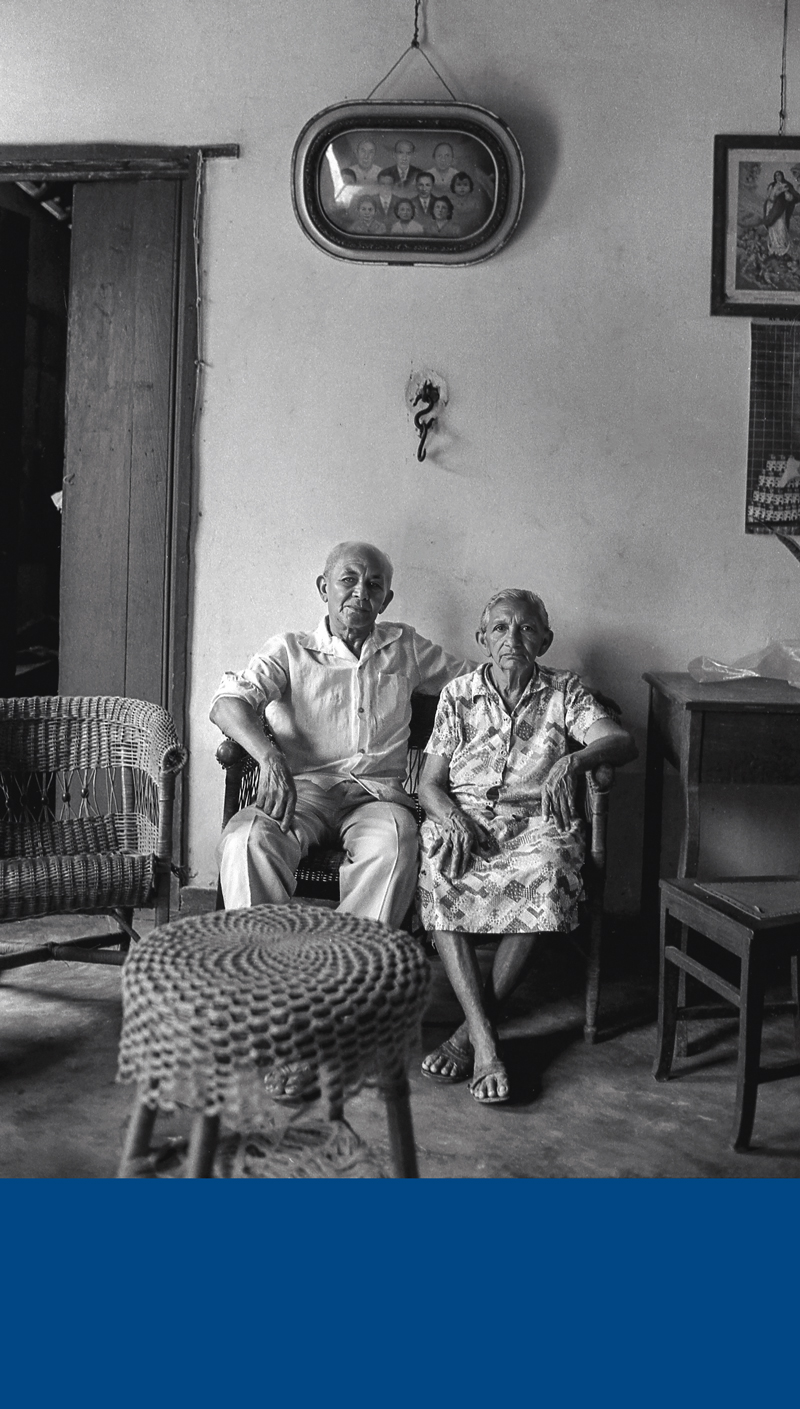 Luiz Braga“It is important to know how we can use the genome to understand social inequalities and better diagnose complex genetic diseases,” adds biologist Eduardo Tarazona of the Federal University of Minas Gerais (UFMG), head of the National Institute of Science and Technology – Genome Ancestry, Diseases, and Bioinformatics in Brazil (INCT-AncesGen) and one of the researchers leading Genomas SUS. “The less European a person is, the less scientists and geneticists know about their diseases.”
One example is an international study in which Colli participated. This study mapped areas of the genome linked to kidney cancer susceptibility and was published in the journal Nature Genetics in 2024. “In previous phases of the study, Brazilian samples were not included out of fear that racial diversity would reduce the effectiveness of the association analysis,” says the doctor. However, the opposite turned out to be true: when a Brazilian cohort was included in the analyses, a previously unknown genetic variant was found that was present in people of African descent.
When American geneticist Francis Collins, then director of the US National Institutes of Health (NIH), gave a lecture at FAPESP in 2014, geneticist Iscia Lopes-Cendes of the University of Campinas (UNICAMP) asked him about the idea of carrying out a population-wide genome project in Brazil. His response was that it was unnecessary since human genetic diversity was already well described. “He was completely wrong. North Americans don’t understand that other Latin populations are not the same as Mexicans,” she laughs, not convinced by the answer. In 2015, Lopes-Cendes founded the Brazilian Initiative on Precision Medicine (BIPMed). “It is the first genome database in Latin America,” she says.
“We have a partnership with the Genomas Angola (GENAN) project, and we have already collected 750 samples,” adds the researcher, who is supervising an Angolan doctoral student on the project. Lopes-Cendes hopes to find genetic variants that have not yet been described and that could have practical uses in both countries, which have ancestral links as a result of slaves brought over during the colonial period.
“If there is a place where precision health care can be made available to everyone, it is in Brazil,” she says. “We have SUS.” She refutes the notion that the technology would be available only to rich countries and people. On the contrary, she believes that it can be an important tool for preventive medicine. “Personalized health care allows for more efficient treatments, at the right dosages, for the right people, with fewer side effects and lower costs.”
Together with geneticist Thais de Oliveira, a postdoctoral researcher at her lab, she published an opinion piece in the journal Annual Reviews of Genomics and Human Genetics in January, emphasizing the importance of public databases of genome information about Latin American populations. Argentine geneticist Rolando González-José of the Patagonian National Center (CENPAT), head of the Argentine Population Genome Reference and Biobank Program (POBLAR), agrees. “It is important for governments to make agreements on connecting genome databases in the region,” he suggested in an email to Pesquisa FAPESP. Like Colli, he says that short-read sequencing has benefits in regard to optimizing available budgets.
The DNA do Brasil project, which is part of the Genomas Brasil Program, aims to contribute to precision health by providing a detailed overview of Brazilian genetic variation. The pharmaceutical industry could also benefit from these advances. In 2021, USP geneticist Lygia da Veiga Pereira, the founder of the project, used the knowledge that she acquired throughout her academic career to create a startup called gen-t, now funded by FAPESP’s Innovative Research in Small Businesses program (PIPE). “We are building a health, lifestyle, and multiomics data infrastructure with 200,000 genomes, which can be used by the industry to accelerate the search for new drugs,” she explains.
The initiative could complement potential implementations of new strategies by SUS. “We are just at the beginning of understanding the impact of genomics on population health,” says Colli.
Projects
1. Genetic susceptibility to kidney cancer (n° 20/10960-5); Grant Mechanism Young Investigator Award; Principal Investigator Leandro Machado Colli (USP); Investment R$5,170,035.66.
2. Proteogenomic evaluation of patients with kidney cancer treated with immunotherapy (n° 23/01274-9); Grant Mechanism Regular Research Grant; Principal Investigator Leandro Machado Colli (USP); Investment R$190,526.40.
3. Brazilian Institute of Neuroscience and Neurotechnology (BRAINN) (n° 13/07559-3); Grant Mechanism Research, Innovation, and Dissemination Centers (RIDC); Principal Investigator Fernando Cendes (UNICAMP); Investment R$53,958,474.98.
4. Development and implementation of data-mining modules for identifying pharmacological targets in the gen-t genome platform for the Brazilian population (n° 23/11678-0); Grant Mechanism Innovative Research in Small Businesses (PIPE); Principal Investigator Kelly Nunes (Divegen Gestão e Tratamento de Dados Ltda.); Investment R$1,071,458.60.
Scientific articles
PURDUE, M. P. et al. Multi-ancestry genome-wide association study of kidney cancer identifies 63 susceptibility regions. Nature Genetics. Vol. 56, pp. 809–18. May 2024.
LOPES-CENDES, I. & OLIVEIRA, T. C. de. Inequalities and Inclusion in Genomics Applied to Healthcare: A latin american perspective. Annual Reviews of Genomics and Human Genetics. Vol. 26, no. 2, pp. 1–6. Jan. 20, 2025.