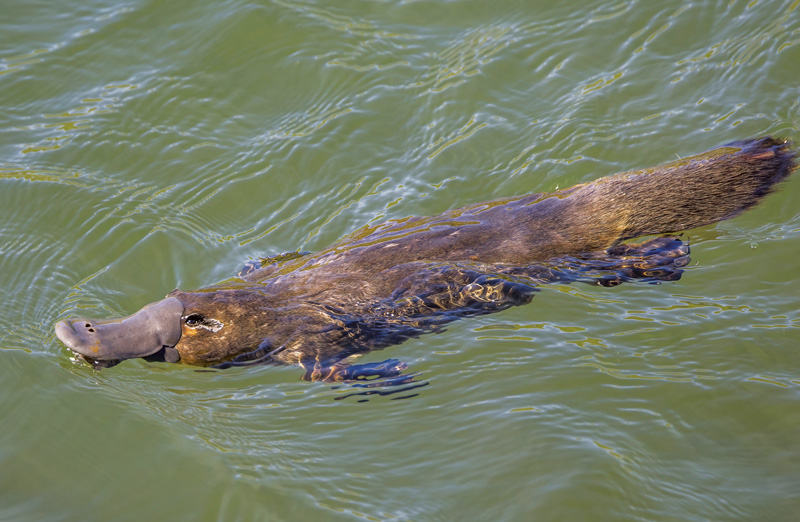
Charles J. Sharp / Wikimedia CommonsPlatypus in Australia: sex is defined by a hormone-derived geneCharles J. Sharp / Wikimedia Commons
One of the many unusual things about platypuses (Ornithorhynchus anatinus) and echidnas (Tachyglossus aculeatus), the only mammals that lay eggs, is that their sex is not determined by the same gene as in other animals. Most mammalian species have two sex chromosomes: an X and a Y, each with many genes. An embryo with an XX pair will be female, and those with an XY pair are male. The process that causes an embryo to develop as a male is normally triggered by the SRY gene on the male Y chromosome. However, this gene has never been found in platypuses and echidnas. Now, researchers from the University of Adelaide, the University of Melbourne, and Monash University in Australia have found that sex in the monotreme species is determined by a modified version of the anti-Müllerian hormone (AMH), which is involved in sex determination and differentiation in mammals, birds, reptiles, amphibians, and fish. Dubbed AMHY because it is found on one of the Y chromosomes of these two species, it is expressed in the male sex organs and inhibits the development of structures that would give rise to female reproductive organs. Alterations in the AMH gene that occurred about 100 million years ago, early in the evolutionary process of monotremes, could explain how AMHY emerged and assumed a role in male sexual development (Genome Biology, May 27; The Conversation, June 12).
Republish