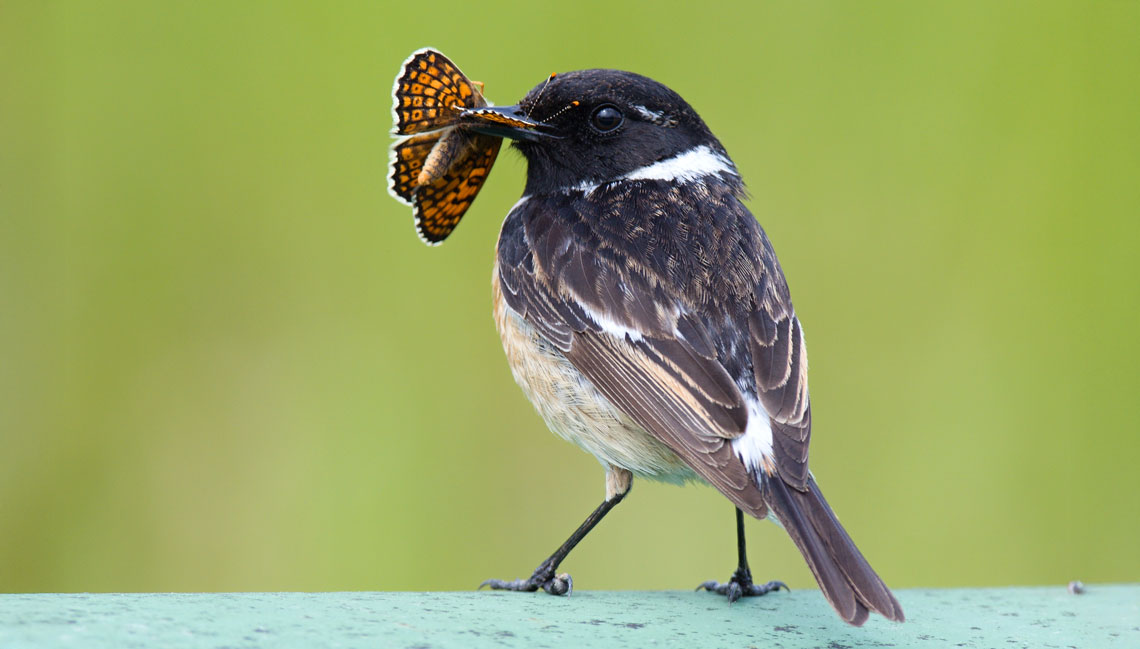
To evade predators, some species rely on camouflage, adopting colors that blend into their surroundings—such as the mottled browns that make a moth nearly indistinguishable against a tree trunk. Others take the opposite approach, flaunting vivid, conspicuous hues that advertise an unpleasant taste or toxic defenses. To determine which environmental conditions favor each strategy, British evolutionary ecologist William Allen of Swansea University led a large-scale experiment spanning five continents. The results, published in Science in September, are illustrated on the issue’s cover with a photograph of a bee-eater—an African bird of the genus Merops—capturing a vividly colored butterfly.
Broadly speaking, when insectivorous predators are abundant and competition is intense, birds are more likely to attack any prey—even those that appear distasteful. Under such conditions, warning (aposematic) coloration ceases to confer an advantage. Conversely, when aposematic insects are abundant in an area, predators are more likely to have negative experiences and learn from them, leading them to avoid such prey. When camouflaged—or cryptic—moths are abundant, birds effectively train their visual perception and become better at detecting them on tree trunks. The data further indicate that this disguise is ineffective under brighter conditions, as increased light makes it easier to distinguish the animal from its background.
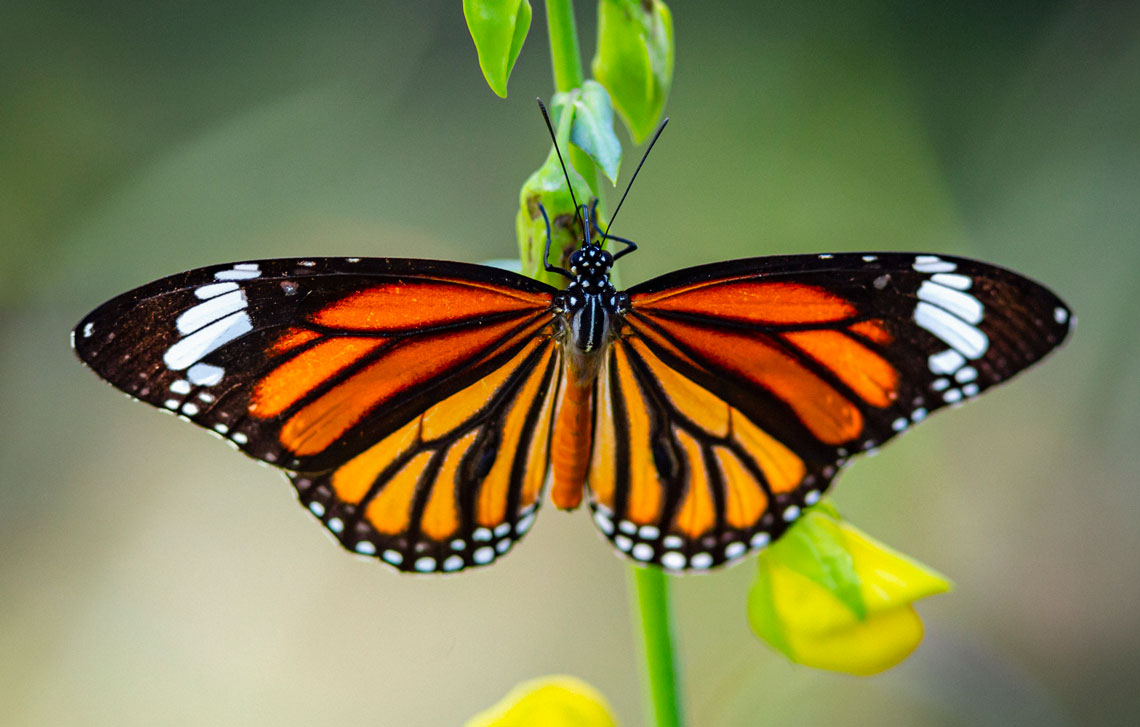
Erik KaritsAfrican tiger butterflies (Danaus chrysippus) are unpalatable due to plants it consumes, and are an example of aposematic colorationErik Karits
The experiment attempted to deceive insect-eating birds using colored triangles designed to mimic moths. These were pinned to trees along with live mealworms, the larval form of the yellow mealworm beetle, commonly available commercially. When a larva disappeared, it indicated a bird attack; when wasps or ants were the predators, researchers found the bait only partially consumed. Three color patterns simulated different strategies: brown, resembling tree bark; orange and black stripes, a typical warning coloration; and turquoise blue and black as a control—equally conspicuous, but rare in nature. Allen took care to print all the artificial moths on the same printer and distribute them to collaborators conducting the experiment in Brazil, Canada, the Czech Republic, Cameroon, India, and Australia.
The Brazilian team was led by biologist Rhainer Ferreira of the University of São Paulo’s Ribeirão Preto School of Philosophy, Sciences, and Languages and Literature (FFCLRP-USP), together with entomologist Vinicius Lopez, who was then his PhD student. Coincidentally, in 2021 Lopez contacted Allen to seek advice on a paper he was preparing about the coloration of velvet ants—which are in fact wasps of the family Mutilidae (see Pesquisa FAPESP issue no. 349). “It could easily have been just another email lost in an inbox, but it ended up causing a turning point in my PhD,” says the researcher, now a postdoctoral fellow at the Federal University of Triangulo Mineiro (UFTM). This was because the British researcher realized that the line of research supervised by entomologist Rhainer Ferreira aligned with a global experiment conceived in 2019, during a conference in which coloration specialists met to design a collaborative study. Allen invited the Brazilian student to join the project.
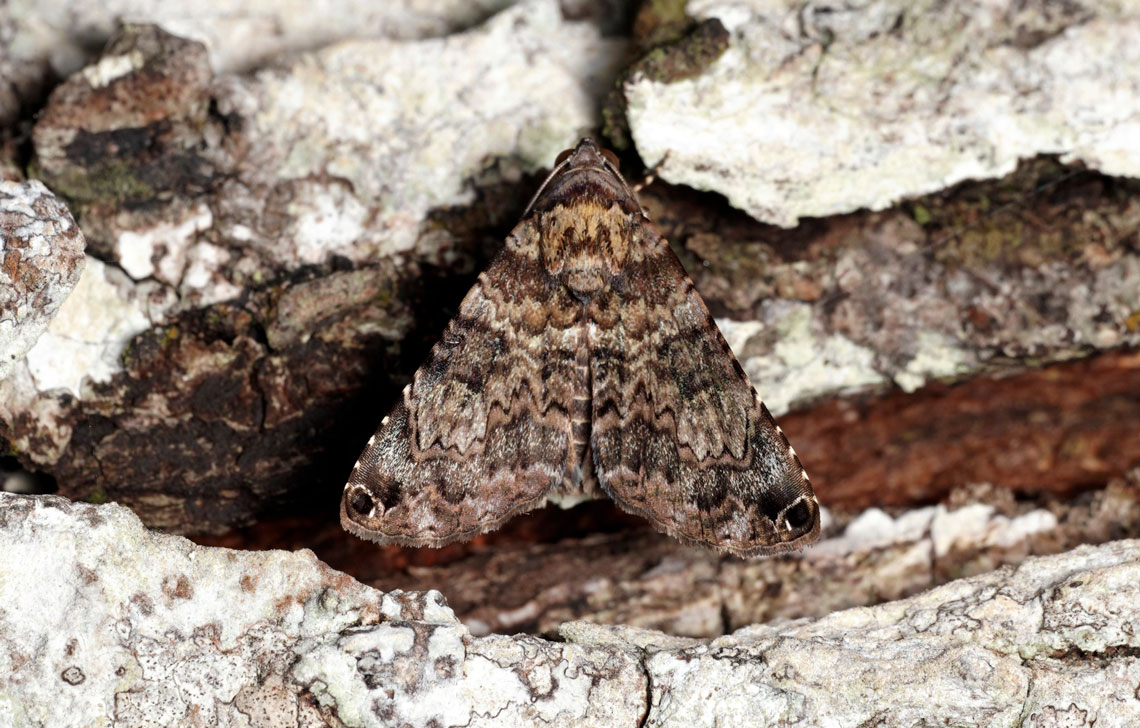
Matteo CassellaCoenipeta bibitrix moths from the American continent is cryptic against tree barkMatteo Cassella
Lopez and his colleagues chose to work at the Serra do Japi Biological Reserve, in Jundiaí, São Paulo State—an area of Atlantic Forest—and at the Vale Encantado Private Natural Heritage Reserve (RPPN), a Cerrado (wooded savanna) site in Uberaba, Minas Gerais. “It was the most physically demanding fieldwork I’ve ever done,” says the entomologist. Over eight consecutive days, starting one hour before dawn, the team had to pin artificial moths onto 90 trees randomly chosen from 180 preselected along a 2-kilometer (km) trail. They then had to be checked at noon, again one hour before sunset, and once more the following day, one hour after sunrise—by which time another 90 trees had already received their experimental moths. Each day, some of the models had to be photographed alongside a gray square—also printed in Swansea—to serve as a luminance control. The team also had to walk the trail recording sightings and vocalizations of birds, in order to compile a catalog of the local predator community. The teams on the other four continents were doing exactly the same thing. “At night we had to cook, eat, wash the dishes, cut the triangles, randomize the trees—and before we knew it, it was already midnight, with a 4:30 a.m. wake-up call,” says Lopez.
“I found the results very interesting,” says biologist Paulo Oliveira of the University of Campinas (UNICAMP), who was not involved in the study. “However, when a study is conducted on such a large, geographically broad scale, local details that might better explain the results tend to be lost.” Because of its global scope, he notes, it is not possible to draw many firm conclusions. In terms of the conditions under which aposematism or camouflage proved more advantageous, the study infers a general trend: camouflage is a less stable strategy, more susceptible to changes driven by human activities, such as altered light conditions caused by deforestation or changes in tree coloration due to pollution. Bright colors work as warning signals across environments, with some variation depending on light levels and the predator community present.
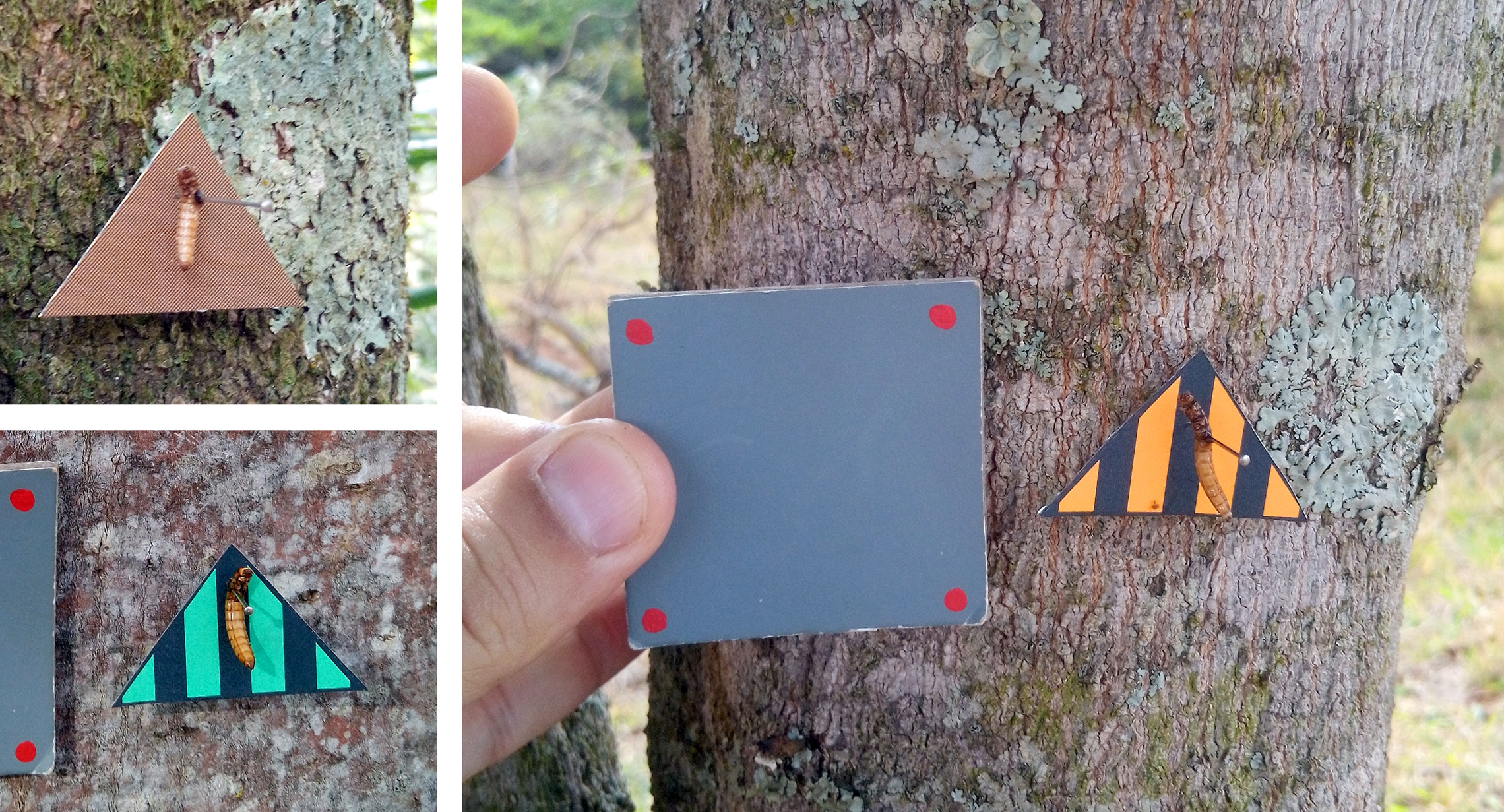
Vinicius Lopez / UFTM Triangles and larvae used to mimic conspicuous and cryptic insectsVinicius Lopez / UFTM
In Oliveira’s view, the study could serve as a data-rich starting point for local experiments in different Brazilian ecosystems. “It would be interesting to compare the Atlantic Forest, the Cerrado, and the Caatinga [semiarid scrublands] to investigate in greater detail the prevalence of camouflaged and aposematic insects in these three biomes,” he suggests, noting that the aim of the study was not comparison, but looking for shared patterns. Another possible next step would be to assess the predominant defense strategies in different forests, to determine whether what appears most advantageous is indeed favored by natural selection. “It would be an excellent next paper,” Lopez agrees.
The story above was published with the title “Some insects hide, others flaunt their colors” in issue 357 of November/2025.
Scientific article
MEDINA, I. et al. Global selection on insect antipredator coloration. Science. Sept. 25, 2025.