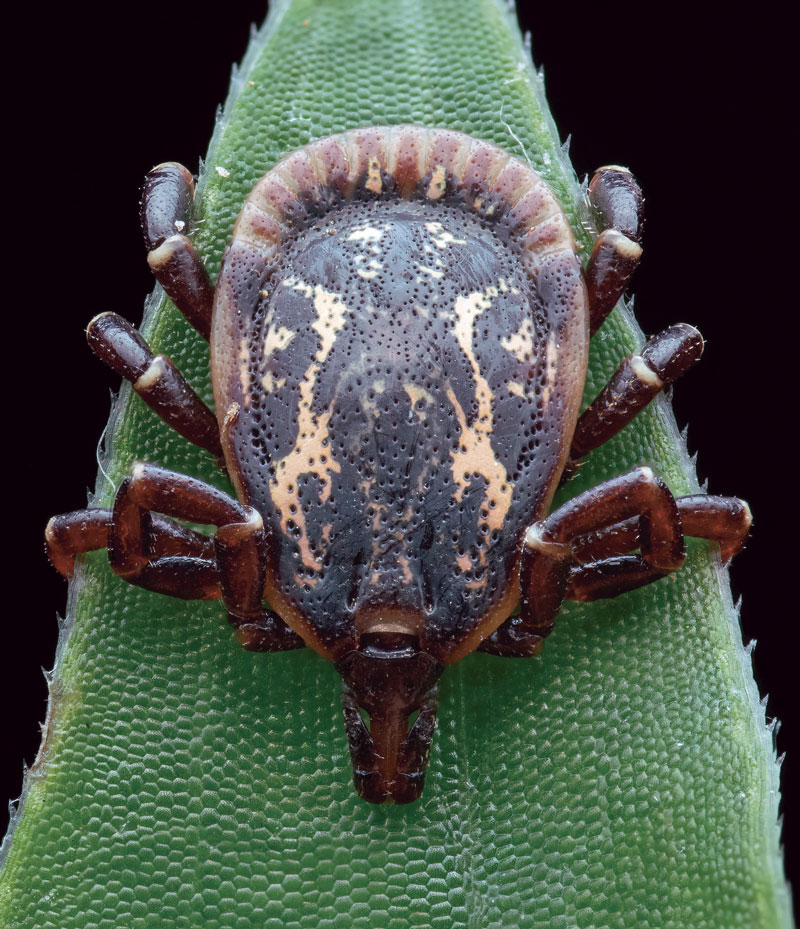
Laurent Hesemans / biodiversity4allA. ovale, transmitter of Rickettsia parkeriLaurent Hesemans / biodiversity4all
In July 2023, while walking in a wooded area near Caraguatatuba on the northern coast of São Paulo, a 37-year-old man and his dog were bitten by bont ticks of the species Amblyomma ovale, which carried the bacterium Rickettsia parkeri. Six days later, the man developed flu-like symptoms and a red lesion on his ankle where he had been bitten. Over the following days, the lesion worsened. When he first visited a healthcare center, he was advised only to take an anti-inflammatory drug. Nearly a month later, having seen no improvement, he returned and was prescribed another medication, which again had no effect. Only on the third visit did laboratory tests reveal abnormalities consistent with Rickettsia infection, but he still did not receive a definitive diagnosis. Antibiotic treatment then resolved the symptoms. The case, confirmed through molecular analysis by researchers from the University of São Paulo (USP) and the São Paulo State Health Department (SES-SP), was recorded as the first recorded instance of spotted fever caused by R. parkeri on the coast of São Paulo. It was the sixth recorded case of the disease in Brazil. The dog exposed to the same ticks remained asymptomatic and did not require treatment (Zoonotic Diseases, September 15).
Republish