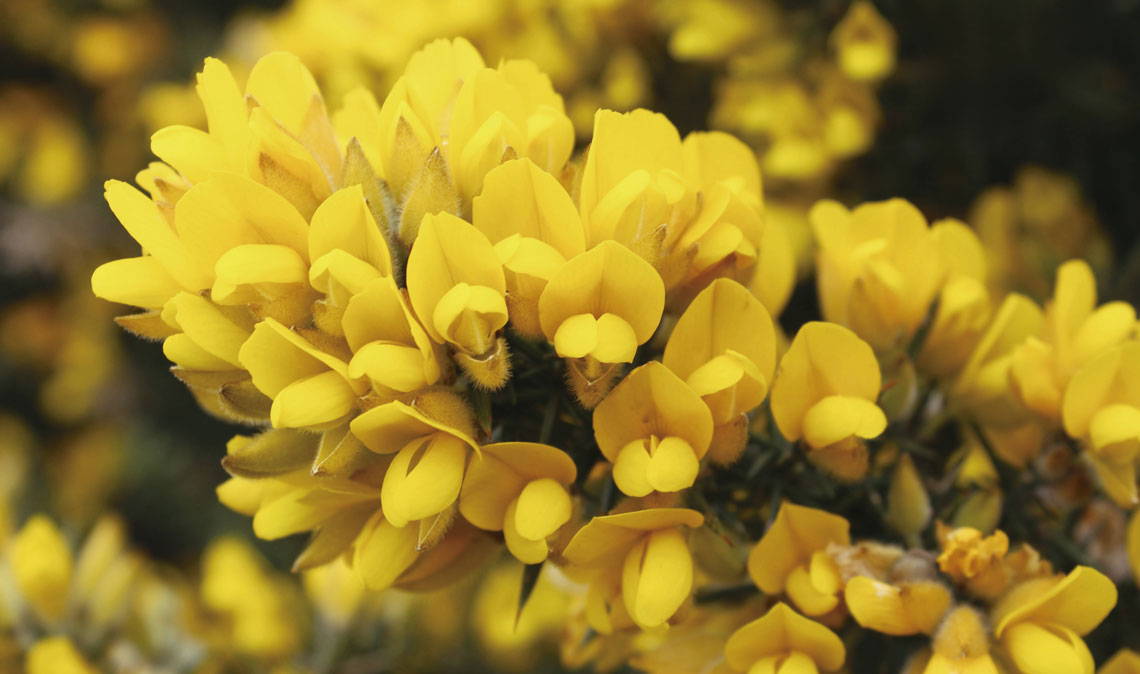
PaleCloudedWhite / Wikimedia Commons With its bright yellow flowers, gorse spreads with the help of bees and antsPaleCloudedWhite / Wikimedia Commons
Botanists from Rio Grande do Sul and Espírito Santo discovered that alliances with small insects allowed an invasive species—gorse (Ulex europaeus)—to spread across high-altitude grasslands typical of the mountains in southern Brazil. This thorny shrub with bright yellow flowers, native to Western Europe, grows up to two meters tall and blooms from May to November, mainly in August. In colder months, western honey bees (Apis mellifera) only pollinate this species, since no others are blooming at this time. Native ants, such as Acromyrmex ambiguus, help the species spread by carrying its seeds. Originally introduced to New Zealand as a hedge plant, it soon became a pest. Now found in 15 countries across Europe, Asia, Africa, and the Americas, it is considered a weed that competes with native vegetation (Acta Botanica Brasilica, May). A report by the Brazilian Platform for Biodiversity and Ecosystem Services (BPBES) recorded 476 invasive exotic species in the country, of which 268 are animals and 208 are plants and algae (see Pesquisa FAPESP issue n° 338).
Republish