Nurse Emanuele da Silva Bernardo managed to escape the precarious health situation that usually plagues transgender individuals in Brazil. She began the social transition process at the age of 17 and experienced situations common to the trans population, such as prostitution and the use of industrial liquid silicone. With her family’s support, she went back to school, completed a technical nursing course, graduated as a nurse, and is currently studying for a master’s degree in Collective Health at the School of Medical Sciences at Santa Casa de São Paulo (FCM-SCSP). Based on her personal experience, she is researching the use of industrial liquid silicone by transgender individuals who prostitute themselves in São Paulo.
Generally, transgender individuals, who do not identify with the biological sex they were assigned at birth, are highly vulnerable to health issues. They have higher rates of HIV, syphilis, anxiety, depression, psychological distress, suicidal ideation, and suicide attempts, according to an article published in August in Revista Brasileira de Epidemiologia (Brazilian journal of epidemiology). This and 13 other articles in the same issue present findings from the TransOdara project, which was funded by the Brazilian Ministry of Health and Pan American Health Organization (PAHO) to conduct interviews from 2019 to 2021 to assess the prevalence of syphilis and other sexually transmitted infections (STIs) among 1,317 transgender individuals in five Brazilian capitals: Manaus, Salvador, Campo Grande, São Paulo, and Porto Alegre.
The prevalence of human immunodeficiency virus (HIV) infection in this population was 34.4% in the five capitals analyzed, according to the study led by researchers from the Federal University of Bahia (UFBA) and the State University of Bahia (UEB), detailed in an article in the same issue of the scientific journal. In São Paulo, of the 403 participants who took the rapid test, 233 (58%) tested positive for syphilis and 107 (27%) for HIV; of the 402 who also took other tests, 41 (10%) tested positive for chlamydia, 33 (8%) for gonorrhea, 8 (2%) for hepatitis B, and 3 (1%) for hepatitis C.
Of the five capitals, the best situation is found in Campo Grande (Mato Grosso do Sul), with relatively lower rates of HIV infection (29%), identified in 50 of the 175 who took rapid tests. The worst scenario is in Porto Alegre (Rio Grande do Sul), where 109 of the 189 participants (58%) tested positive for HIV (see infographic). The disease caused by this virus, AIDS, can be prevented or treated with antivirals (see Pesquisa FAPESP issue n° 267).
There are about 3 million people in Brazil—or 2% of the adult population—who identify as transgender or nonbinary (they do not identify as either male or female). This estimate comes from a study by the Botucatu School of Medicine at São Paulo State University (FMB-UNESP), which was published in the journal Scientific Reports in 2021, based on interviews with 6,000 people in 129 municipalities in all regions of Brazil (see Pesquisa FAPESP issue n° 312). The new National Demographic and Health Survey by the Brazilian Institute of Geography and Statistics (IBGE) should be released by the end of the year, and it will feature an updated estimate of the transgender and nonbinary population in Brazil.
However, there are still many misconceptions. “Even in the health services, the idea persists that these women only need surgery and hormones, when in fact they need comprehensive care,” says Santa Casa epidemiologist Maria Amélia Veras, one of the coordinators of the TransOdara Program. The researcher founded the LGBT+ Population Health, Sexuality, and Human Rights Research Center (NUDHES) at the FCM-SCSP 10 years ago to conduct studies that could help formulate and implement public policies. “We are working to help the SUS [Unified Health System],” she says. One of the guidelines required of group members is to present the results of their research first to the target audience they have worked with (see Pesquisa FAPESP issue n° 230). This was the case on September 10, when they presented participants and community organizations with the results of the Manas por Manas project, funded by the US National Institutes of Health (NIH), which deals with prevention and self-care among transgender individuals.
“Access to healthcare depends on proximity to services, the relationship with the professionals, and the history of the patient, who generally has experienced a lot of violence and discrimination,” says geriatrician Milton Crenitte of the Municipal University of São Caetano do Sul, who was not involved in the studies. According to Crenitte, establishing specialized outpatient clinics, training professionals, and providing individualized care with multidisciplinary teams could help overcome the barriers to accessing health services.
In 2020, the São Paulo Municipal Health Department approved a set of rules applicable to caring for transgender individuals, with the aim of supporting basic healthcare, accommodations, and specific care for this population. However, in the five state capitals studied, the TransOdara researchers heard reports of discrimination when they conducted 52 in-depth interviews. The average age of the participants was 34, nearly half (23) had only completed high school, and 22 of them lived on a monthly income of R$1,000 to R$2,000. “[The doctor] said [my given name] out loud and there were some people there, I heard some giggling. […] I’ve been putting off [going back] for a year,” said one of the interviewees from São Paulo, as reported in one of the articles coordinated by FCM-SCSP researchers.
“I’ve seen many reports of refusals, even in basic health services, because they don’t serve trans people,” says psychologist Michel de Oliveira Furquim dos Santos, a volunteer in psychosocial care for LGBT+ people at the Center for Reference and Defense of Diversity (CRD) in São Paulo. He is currently working on his PhD at the University of São Paulo’s School of Public Health (FSP-USP), with a grant from FAPESP, on social influences that may have helped shape the identity of trans people from São Paulo and Tabatinga (Amazonas). Santos emphasizes that discrimination violates the principle of universal public healthcare.
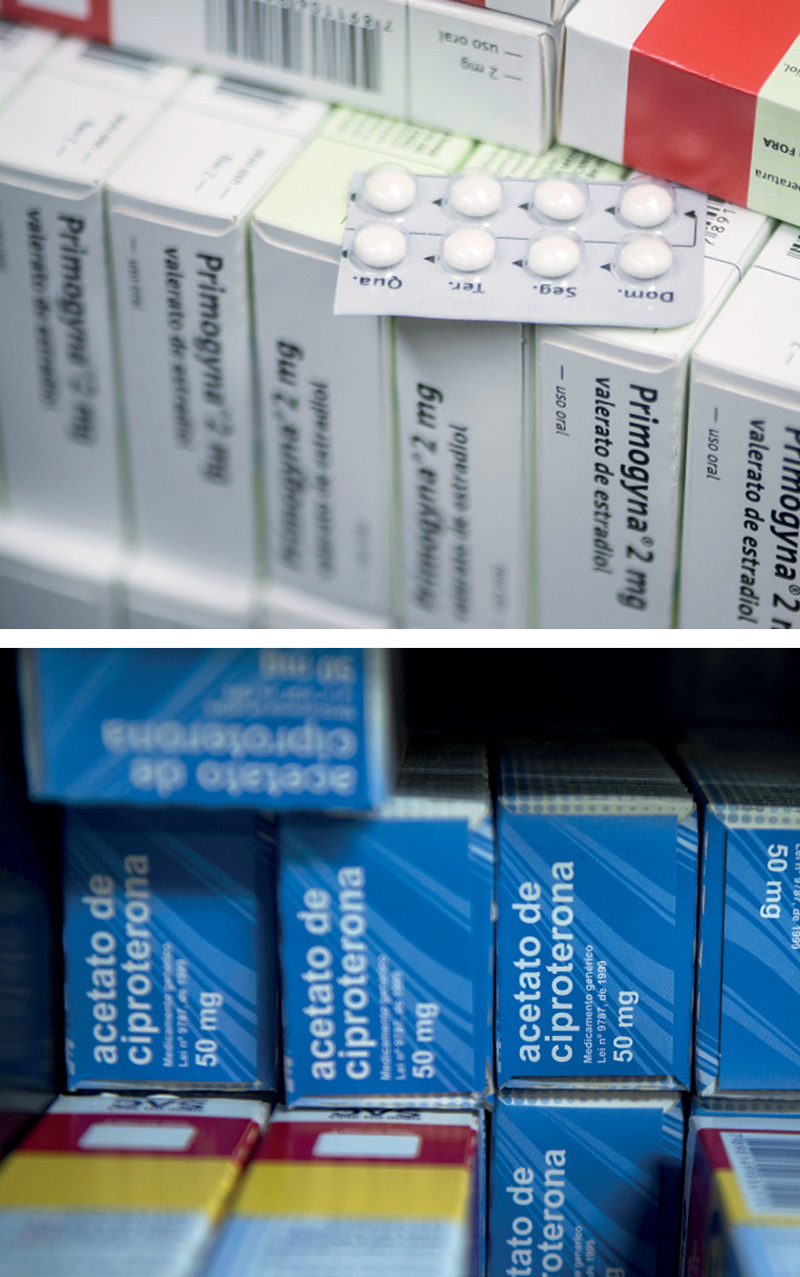
Léo Ramos Chaves / Pesquisa FAPESPMedical treatment can include, after rigorous screening, administering hormones capable of accentuating feminine or masculine characteristicsLéo Ramos Chaves / Pesquisa FAPESP
Transgender individuals tend to have serious mental health problems—from depression to suicidal thoughts—that are exacerbated by drug use. “The ridicule, the stares, the disrespect for your name, all of that affects your mental health. Not having friends, not having money, not being able to enter the formal job market. In the case of prostitution, you don’t always want to have sex every day. To cope, many say ‘I’ll have a cognac,’ which can later turn into cocaine,” says Emanuele Bernardo. “We’re always thrown into a state of solitude.”
A team from the Oswaldo Cruz Foundation (FIOCRUZ) in Rio de Janeiro confirms this perception in another TransOdara article, also published in Revista Brasileira de Epidemiologia. The prevalence of polydrug use over a 12-month period in the capitals studied was 49.3% (of the respondents), with a predominance of alcohol (65.5%), tobacco (52.9%), cannabis (40.1%), and cocaine (31%).
In an editorial published in Science in August, Alex Keuroghlian, director of the Division of Public and Community Psychiatry at Massachusetts General Hospital in Boston, and Asa Radix, from New York University, both in the United States, note that transgender and gender-diverse (TGD) youth and adults who receive gender-affirming care have lower rates of anxiety, depression, substance use, and suicide attempts.
Since 2009, when he started working at the then recently opened STD/AIDS Reference and Training Center in São Paulo (CRT-AIDS), psychologist Ricardo Barbosa Martins, coordinator of the Comprehensive Health Outpatient Clinic for Transgender People, has observed that many transgender individuals decide to take hormones on their own to give themselves feminine or masculine characteristics, even at the risk of serious damage to their health, given the difficulties they face in making the transition within health services. “Here at CRT, the biggest demand from transgender individuals is still for hormones,” she says. CRT administers masculinizing and feminizing hormones to people who are at least 16 years old, after assessment by a multidisciplinary team.
Among the five capitals studied by TransOdara, the most dramatic situation regarding the use of hormones is in Manaus. There, 95% of the participants said they used them without a prescription.
Paola Alves de Souza, the community education coordinator at the CRT-AIDS Research Center and a doctoral student in psychology at USP, highlights some of the reasons for self-administering feminizing hormones: “The lines at trans clinics are long, and people want immediate results.” One of the members of the TransOdara research team began the transition process during her master’s studies, from 2009 to 2011 at the Federal University of Campina Grande (UFCG), in Paraíba, and faced difficulties in finding formal employment.
In 2015, while living in São Paulo, she was hired to join the technical team working on the São Paulo government’s Transcidadania program, which initially had 100 openings and currently offers 1,020 so that trans men and women in vulnerable situations can finish primary and secondary school and obtain professional qualifications. For two years, the beneficiaries receive a monthly grant of R$1,482 and psychological, legal, social, and educational support, which is important given this population’s vulnerability. “I have several trans friends who didn’t have family support like I did and who were thrown out of their homes,” says trans chemist and performer Lariel Chagas da Silva Neres, who is completing her PhD in biotechnology at São Paulo State University (UNESP), Araraquara campus.
In 2022, trans student Luara Souza helped found the Trans Consciousness Center at the University of Campinas (UNICAMP), where she is a student. The group organizes meetings like SlamBall, which combines poetry, dance, and a parade, to attract interested people and discuss trans issues with the academic community and residents of the Campinas Metropolitan Region.
It is, however, a slow process. Gabrielle Weber Martins, who has a degree in molecular sciences and a PhD in elementary particle physics, struggled to find information on how to begin her gender transition and only came out as a trans woman in 2014, after passing a public exam to become a professor at USP’s School of Engineering on the Lorena campus. “I’ve known I was trans since I was 10 years old,” she says. She is now 40 years old.
The story above was published with the title “Viruses, stigmas, and solitude” in issue 345 of November/2024.
Project
Composing worlds: Abjection, the battle for healthcare, and ancestry with trans people in São Paulo (SP) and Tabatinga (AM) (n° 23/13782-9); Grant Mechanism Doctoral Fellowship in Brazil; Supervisor José Miguel Nieto Olivar (USP); Beneficiary Michel de Oliveira Furquim dos Santos; Investment R$263,329.92.
Scientific articles
PINHEIRO, T. F. et al. Dificuldades e avanços no acesso e no uso de serviços de saúde por mulheres trans e travestis no Brasil. Revista Brasileira de Epidemiologia. Vol. 27, sup. 1, e240007. Aug. 19, 2024.
DOURADO, I. et al. Prevalência de infecção pelo vírus da imunodeficiência humana (HIV) em mulheres trans e travestis no Brasil: Dados do estudo TransOdara. Revista Brasileira de Epidemiologia. Vol. 27, sup. 1, e240004. Aug. 19, 2024.
SPIZZIRRI, G. et al. Proportion of people identified as transgender and non-binary gender in Brazil. Scientific Reports. Vol. 11, 2240. Jan. 2021.
MOTA, J. C. da et al. Uso de múltiplas substâncias e fatores associados em mulheres trans e travestis: Resultados do estudo TransOdara, Brasil. Revista Brasileira de Epidemiologia. Vol. 27, sup. 1, e240011. Aug. 19, 2024.
KEUROGHLIAN, A. S. & RADIX, A. E. Transgender health research needed. Science. Vol. 385, no. 6711. Aug. 23, 2024.