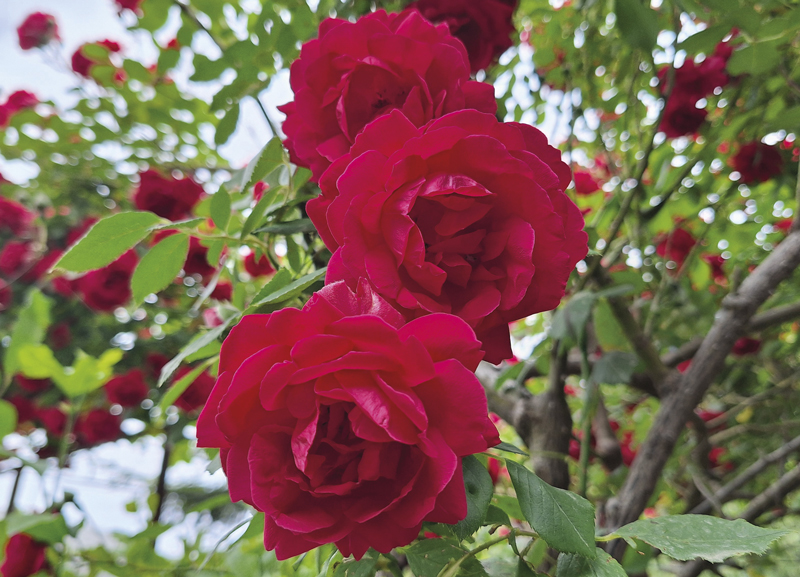
Spring’s Flowers / Wikimedia CommonsOxylipins, responsible for pleasant odors, were already known to be capable of alleviating anxietySpring’s Flowers / Wikimedia Commons
Or to put it more formally: which volatile organic compounds, responsible for the fragrance of the rose—the most cultivated ornamental plant in the world—generate a positive or negative emotional response? Scientists from the University of Lyon, Jean Monnet University, and the University of Rennes, all in France, invited 19 people to evaluate the aromas of 10 freshly picked rose varieties in a blind test. Among the volatile compounds associated with the typical scent of roses “there were molecules that we expected to find, such as phenylpropanoids, but also others that we did not foresee, such as ionones and oxylipins,” said Nathalie Mandairon of the University of Lyon, one of the coauthors of the paper, in a statement issued by the French National Center for Scientific Research (CNRS). The test showed that a higher concentration of ionones and oxylipins makes the rose’s aroma more pleasant. Unpleasant odors, meanwhile, were determined by phenolic methyl esters, as well as other compounds. In nature, volatile compounds attract pollinators, parasite predators, and microorganisms (CNRS, April 28; iScience, February 21).
Republish