newsletter printed editions
español português
  • Science
  • S&T Policy
  • Technology
  • Humanities
  • Health
  • Videos
  • Print issue
  • newsletter
  • português español

Issue # 333 _ November 2023


Browse the magazine

Cover

The path to sustainable hydrogen
Brazil begins producing the fuel, which is seen as key to the transition to a low-carbon economy By Yuri Vasconcelos

Interview

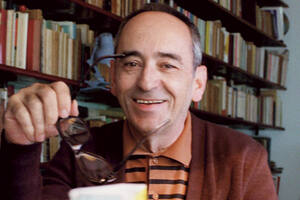
Marco Lucchesi: The frontier poet

The president of Brazil’s National Library, fluent in 22 languages, translates work from languages such as Persian, Russian, and Turkish By Christina Queiroz


Sections

Data

Editorial

Good practices

Notes

Obituary

Photolab

Research Itineraries

Retrospect


Development

Industrial policy retakes the spotlight

Government and private sector propose missions to combat deindustrialization of the Brazilian economy

By Fabrício Marques

Health

Open innovation to fight diseases

Center for advanced therapies at Hospital Israelita Albert Einstein pursues new treatments for genetic, chronic, and malignant diseases

By Maurício Oliveira

Communication

The language barrier in scientific communication

Study exposes disadvantages faced by researchers whose first language is not English

By Fabrício Marques

Astrophysics

James Webb data challenges cosmology

Telescope observations fuel debate about the formation of galaxies and the speed at which the Universe is expanding

By Marcos Pivetta

Physics

Gravity also attracts antimatter

Gravitational force on antiparticles is equal to the force exerted on particles

By Marcos Pivetta
Nobel Prize

Eleven people received a Nobel Prize in 2023

Four were women, the same number as in 2018 and 2020, only lower than in 2009, when there were five winners

By Redação

Climate

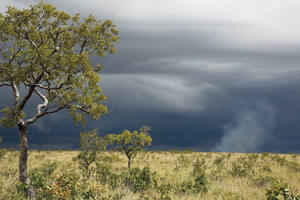
Droughts worsen in the Cerrado

In the central-north of the biome, rainfall in the dry months has fallen by up to 50% in the last three decades

By Marcos Pivetta and Guilherme Eler

Environment

Plastic rocks

A mixture of minerals, animal remains, and synthetic polymers has emerged as another form of pollution and a threat to the marine environment

By Sarah Schmidt

Ecology

Parasites that turn spiders into zombies

Infected by fungi, invertebrates climb higher to die

By Maria Guimarães

Genetics

Chikungunya virus caused seven outbreaks in Brazil in 10 years

The agent that causes the disease has already been identified in 60% of municipalities

By Felipe Floresti

Epidemiology

Suicide rate among indigenous people almost three times higher than the general population

The suicide rate is highest in the states of Amazonas and Mato Grosso do Sul, especially among adolescents and young adults

By Renata Fontanetto

Archaeology

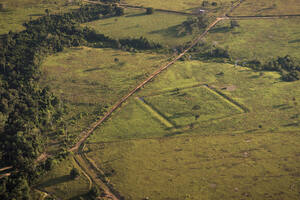
Human footprints suggest large population in ancient Amazon

Cutting-edge technology used to identify geoglyphs beneath the forest, while work with current Indigenous peoples suggests terra preta has been intentionally produced since pre-Columbian times

By Letícia Naísa

Paleontology

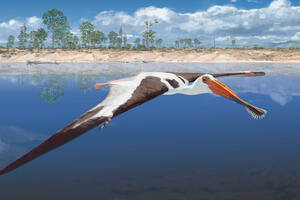
An iberian pterosaur

Lusognathus almadrava is the first species of winged reptile described in Portugal, with Brazilian participation

By Sarah Schmidt

Electronic engineering

Carnaúba: an X-ray supermicroscope

The longest light beamline of Sirius in Campinas, São Paulo State, provides details on fossil histories, interaction of plants with the soil, and impurities in diamonds

By Carlos Fioravanti

Public policy

Number of gifted people is underreported in Brazil

The country does not have the tools needed to identify and nurture individuals with high skills in different age groups and fields of knowledge

By Christina Queiroz

Music

Book gathers scores by Antonio Madureira

Composer is one of the biggest names of the Armorial Movement, which looked for the intersection between the erudite and the popular

By Soraia Vilela

Literature

Anthologies broaden perspectives on the work of José Paulo Paes

Self-taught intellectual wrote poetry and essays, in addition to translating the works of other important authors

By Juliana Vaz
Follow Us
Home About us Contact
FAPESP Agência FAPESP Biblioteca Virtual

© Revista Pesquisa FAPESP - All rights reserved.

>