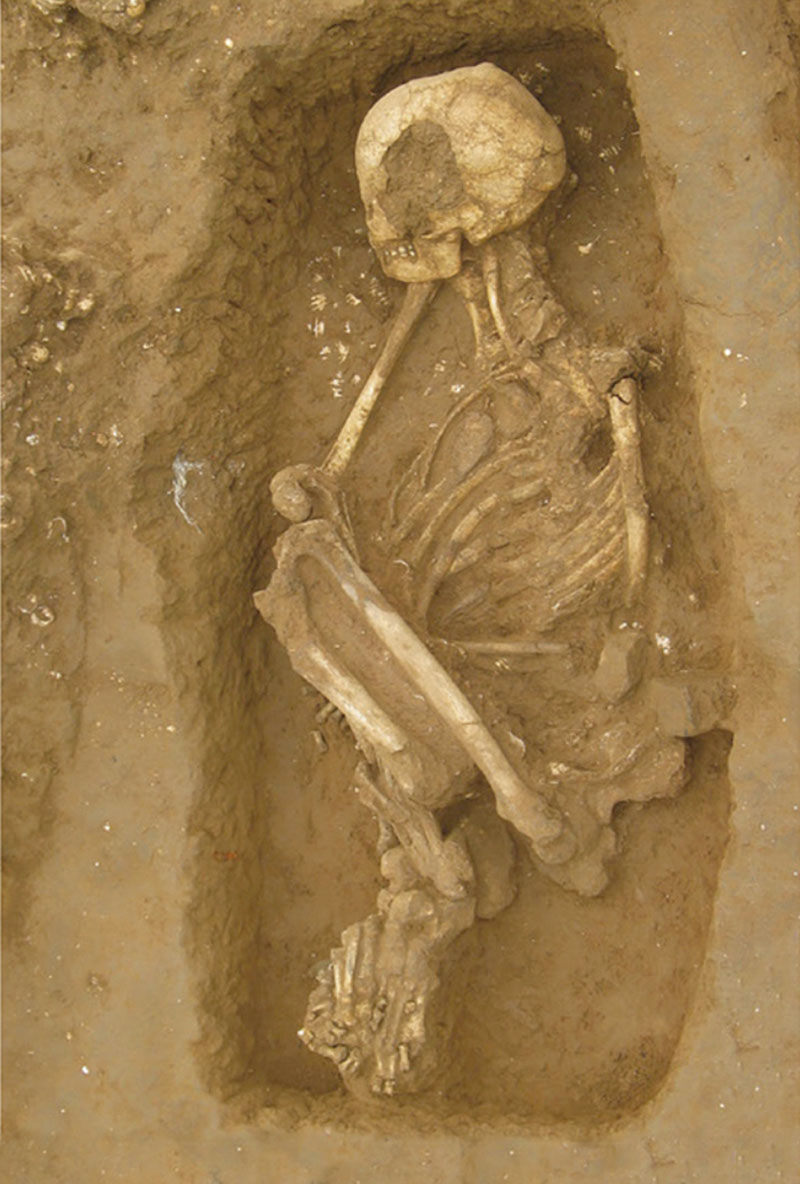
HUNG, H.-C. et al. PNAS. 2025One of the skeletons unearthed in southern China, dated at 12,000 to 14,000 years oldHUNG, H.-C. et al. PNAS. 2025
After examining the remains of 54 human bodies, archaeologists from the Australian National University identified human mummies in Southeast Asia at least 7,000 years older than those found in Egypt. Between 12,000 and 4,000 years ago, hunter-gatherers in southern China, Southeast Asia, and nearby islands—including Borneo and Java—bound their dead in squatting positions and slowly dried them over smoldering, low-temperature fires for several months before burial. Lengthy exposure to smoke mummified the skin of the corpses, preventing the skeletons from disintegrating. The same technique is still used in mountainous areas of the island of New Guinea, Indonesia. The Chinchorro people, who lived in what is now northern Chile and southern Peru between 7000 and 1500 BCE, developed their mummification techniques around 7,000 years ago, removing internal organs before leaving bodies to dry in the desert. The Egyptians’ use of resins and other embalming substances to mummify the dead emerged about 6,300 years ago (Science News and PNAS, September 15).
Republish