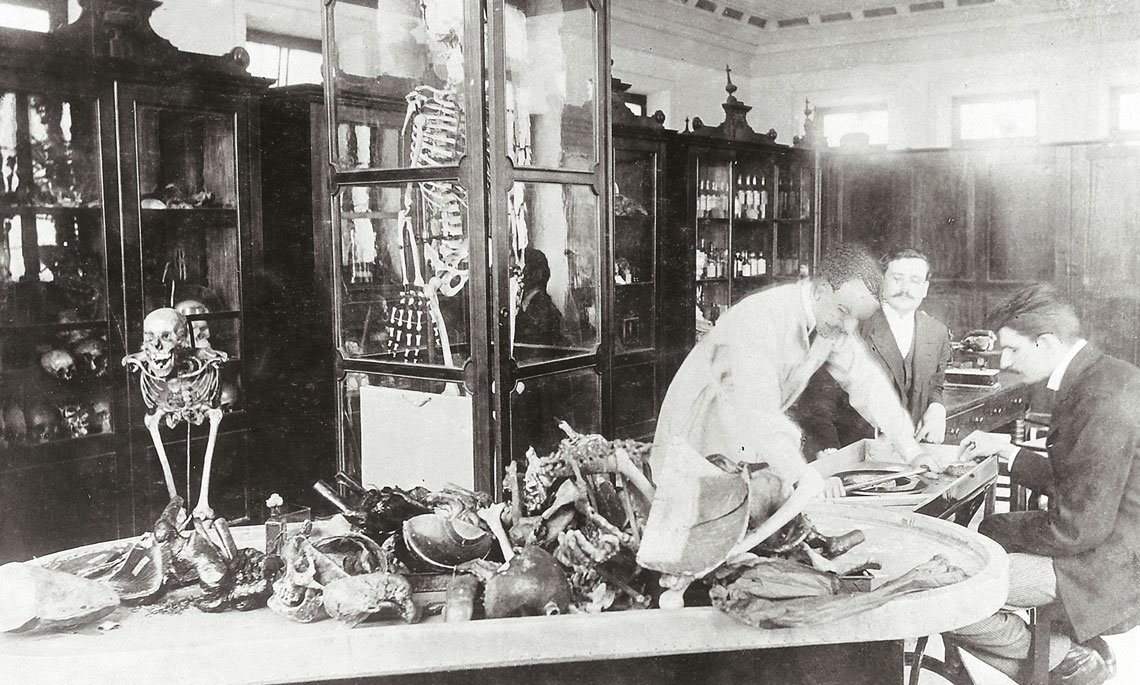
In 1897, the Brazilian Army destroyed the village of Canudos, a supposed antirepublican stronghold in the interior of Bahia, and killed almost all of its inhabitants. Soldiers exhumed the body of the rebel leader, Antônio Vicente Mendes Maciel (1830–1897), known as Conselheiro, decapitated him, and transported his head to the Bahia School of Medicine, one of the institutions that would later form the Federal University of Bahia (UFBA).
Raimundo Nina Rodrigues (1862–1906), a physician from Maranhão and one of the school’s professors, examined Conselheiro’s skull. He is regarded as the founder of Brazilian criminal anthropology, one of the first to study Black culture in Brazil, and an early proponent of race as a key element in understanding the formation of Brazilian society. Convinced that skull shape and deformities determined behavior, he sought to prove that Antônio Conselheiro had a biological predisposition to madness and crime.

Wellcome Collection Portrait of the doctor, attributed to Lopes RodriguesWellcome Collection
This approach was known as phrenology, formulated by German physician Franz Joseph Gall (1758–1828) and later adopted by Italian criminologist Cesare Lombroso (1835–1909), who argued that criminality could be identified through physical traits, including bumps or depressions in the skull. In his book As raças humanas e a responsabilidade penal no Brasil (The human races and criminal responsibility in Brazil; 1894), Nina Rodrigues wrote that it was a mistake for Brazilian law to treat “the descendants of civilized Europeans, the children of the savage tribes of South America, and the members of the African hordes, subject to slavery, as equals before the [criminal] code.”
However, he was unable to apply this theory to the skull of the Canudos leader. In his 2016 doctoral thesis at the Oswaldo Cruz Foundation (FIOCRUZ), historian Filipe Monteiro, now at the State University of Minas Gerais (UEMG), reexamined Rodrigues’s report on Conselheiro’s skull. “The conclusion was unequivocal,” Monteiro writes. “He himself wrote: ‘It is, therefore, a normal skull.’ What he did claim to detect was a chronic delusion with systematic evolution—something that, at the time, was thought to occur only in white people.”
“At that point, Nina Rodrigues began to question craniometric methods, which defended the biological inferiority of certain races or individuals,” says Monteiro, who classifies the doctor as a “vacillating racialist” in both his thesis and a January 2020 article in Topoi. Although Nina Rodrigues never supported eugenics, his name remained tied to the doctrine formulated by English physician Francis Galton (1822–1911), who defended the supposed superiority of some human groups and advocated the genetic improvement of the population.
Racism is a broader concept than eugenics: it describes a system in which certain alleged human races oppress others, producing consequences that extend beyond ideas of genetic “improvement,” such as segregation and denial of rights. Racialism provides the theoretical basis, claiming that humanity can be divided into biologically distinct races ranked by supposed superiority. It offers the pseudoscientific justification for unequal systems. Eugenics is one of the practices that can arise within a racist society.
Nina Rodrigues created methods of work and detailed analysis of corpses, the basis of forensic medicine
The son of farmers, Nina Rodrigues left São Luís, the capital of Maranhão, for Salvador in 1882. He enrolled in the School of Medicine of Bahia and, three years later, transferred to the School of Medicine in Rio de Janeiro. In 1886, during his fifth year of studies, he produced his first academic work—on morphea, an autoimmune disease that causes hardening and discoloration of the skin—based on cases in residents of Anajatuba, in northern Maranhão. In 1887, he returned to Salvador and began an internship at Santa Casa de Misericórdia, before moving once again to Rio de Janeiro. He completed his medical degree at the School of Medicine in Rio de Janeiro in December 1887.
After graduating, Nina Rodrigues began publishing articles on Hansen’s disease (then called leprosy) in the Gazeta Médica da Bahia, and writing in the São Luís newspaper Pacotilha about the health impacts of poor nutrition during the short period he lived again in the city before settling permanently in Salvador. His recommendations, including the use of cassava flour as a dietary supplement, made such an impression that he earned the pejorative nickname “Doctor Dry Flour.”
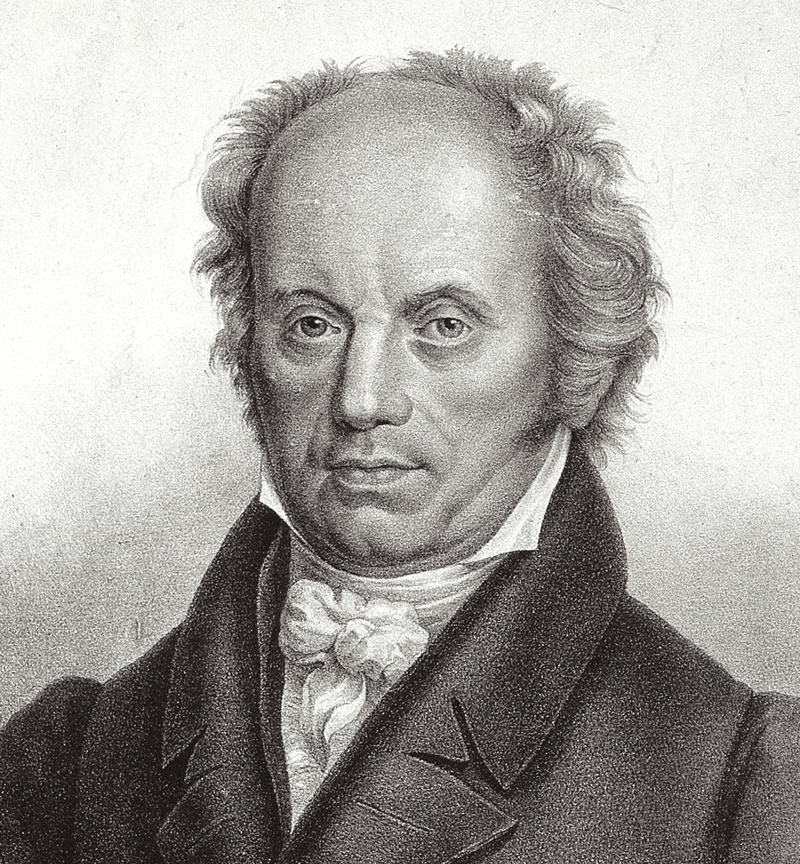
Wikimedia CommonsFranz Gall, the creator of phrenology, in a lithograph by A. F. KunikeWikimedia Commons
The study of Afro-Brazilian culture also attracted him. “He visited African places of worship and studied their rituals,” says Monteiro. “It was during these visits that he carried out the anthropological work for which he became known, such as the book O animismo fetichista dos negros baianos [The fetishistic animism of the Black people of Bahia; 1896].”
In his book O velho e o novo “Nina” (The old and the new “Nina”), published in 1979, Estácio de Lima (1896–1984), a professor at the School of Medicine of Bahia, recounts that senior physicians were unsettled by the young doctor’s interests. “Nina is crazy!” they would say, according to Lima. The reasons, as he discovered: “He frequents Candomblé ceremonies, sleeps with inhaôs [or iaôs, people initiated into Candomblé], and eats the food of the orixás.”
In contrast, others respectfully referred to him as the “Doctor of the Poor,” because he distinguished himself in treating illnesses most common among the most vulnerable populations, such as leprosy, malaria, and beriberi, now known to be caused by a lack of vitamin B1, but at the time still attributed to putrid exhalations called miasmas. Nina Rodrigues played a direct role in controlling a beriberi outbreak at the São João de Deus Asylum for the Insane, now the Juliano Moreira Hospital, in Salvador. In 1904, 58 of its 180 residents, all with mental disorders, died from the infection.
In an article published in June 2001 in História, Ciências, Saúde – Manguinhos, physicians Ronaldo Jacobina and Fernando Carvalho, from the School of Medicine of Bahia (FAMEB-UFBA), revisited the episode. They report that Nina Rodrigues inspected the asylum, located atop a hill, and concluded that the wind and rain should have prevented the formation of miasmas. He ultimately demonstrated that it was not the environment, but the conditions under which the residents were kept, that caused the deaths. He later proposed and joined a commission responsible for reforming the institution.

Iphan Digital Collection São João de Deus Asylum: in 1904, 58 patients died of beriberi, initially attributed to contaminated airIphan Digital Collection
In Salvador, Nina Rodrigues also took part in studies aimed at improving basic sanitation and health inspections at ports. These initiatives followed the hygienist ideas that had taken root in Brazil in the nineteenth century, advocating for better sanitary practices as a strategy to prevent contagious diseases (see Pesquisa FAPESP issue n° 134).
To him, the crowded ships filled with foreigners confined during long sea voyages were ideal breeding grounds for the spread of disease. “Nina Rodrigues noted that the government lacked the equipment needed to sanitize the ports or even to remove the terrible odor that lingered in those areas,” says Monteiro.
The doctor also distinguished himself in the field of forensic medicine, which applies medical and scientific knowledge to assist the justice system in resolving legal issues. Before his work, Brazil lacked standardized methods, laboratories, or manuals for forensic practice. “In many cases, when someone died, the body was only superficially examined at the police station and then buried or disposed of,” explains Monteiro. “Nina began emphasizing the need for laboratories and for performing rigorous, detailed examinations of corpses to determine the cause of death.”
This work, however, led him to controversial conclusions. “He used measurements taken from corpses in an attempt to support racist theories claiming that some races were inferior to others,” says Monteiro in reference to ideas that would later reach Brazil in the twentieth century through other racist intellectual currents, including eugenics.

T. H. Wendt (1907) / Wikimedia Commons Italians arrive in Santos in 1907: according to Nina Rodrigues, lack of hygiene during the journey facilitated the spread of diseasesT. H. Wendt (1907) / Wikimedia Commons
Eugenics and other proposals
“The ideas of racial superiority arrived packaged as scientific, grounded in social Darwinism,” says historian Weber Lopes Góes, from the Federal University of ABC (UFABC), who studied the history of the eugenics movement in Brazil during his master’s and doctoral research. Social Darwinism sought to explain racism, colonialism, and social inequality by wrongly applying the principles of biological evolution to social phenomena. These new conceptual trends blended with theories then considered scientific, such as hygienism and positivism, the latter created by French philosopher Auguste Comte (1798–1857), who argued that valid knowledge must be scientific and verified through empirical methods.
In Brazil, eugenic theories, supported by the bourgeoisie and landowners, spread quickly. In 1917, the Rio de Janeiro physician Renato Kehl (1889–1974) delivered a lecture at the Young Men’s Christian Association (YMCA). Published in the Diário do Comércio, the speech attracted the figures that would establish the Eugenic Society of São Paulo in 1918. “Members of this association began debating how eugenics could contribute to fighting diseases, such as yellow fever, and what they called ‘social poisons,’ referring to issues like alcoholism,” explains Góes.
“Evaluating Nina Rodrigues always leads to a dilemma,” notes historian Leonardo Dallacqua de Carvalho, from the State University of Maranhão (UEMA), author of Um maranhense intérprete da miscige(nação): Raimundo Nina Rodrigues e a formação racial brasileira (1862-1906) (A Maranhense interpreter of miscegenation: Raimundo Nina Rodrigues and the formation of Brazilian racial culture [1862–1906]; 2025). “At various points, he attempted to defend the rights of Black Brazilians, yet the foundation of this defense was his belief that they were inferior.”
Carvalho stresses, “It is not accurate to call Nina Rodrigues the father of eugenics.” His reasoning: “Eugenics only began to be discussed in Brazil in 1910. Nina was a racialist, but eugenics was not among the theories he used to justify his views on racial inequality.” Monteiro adds, “He had begun to question racialist theories, though without fully abandoning their core premises. His conclusion after examining Antônio Conselheiro’s skull suggests this distancing.”
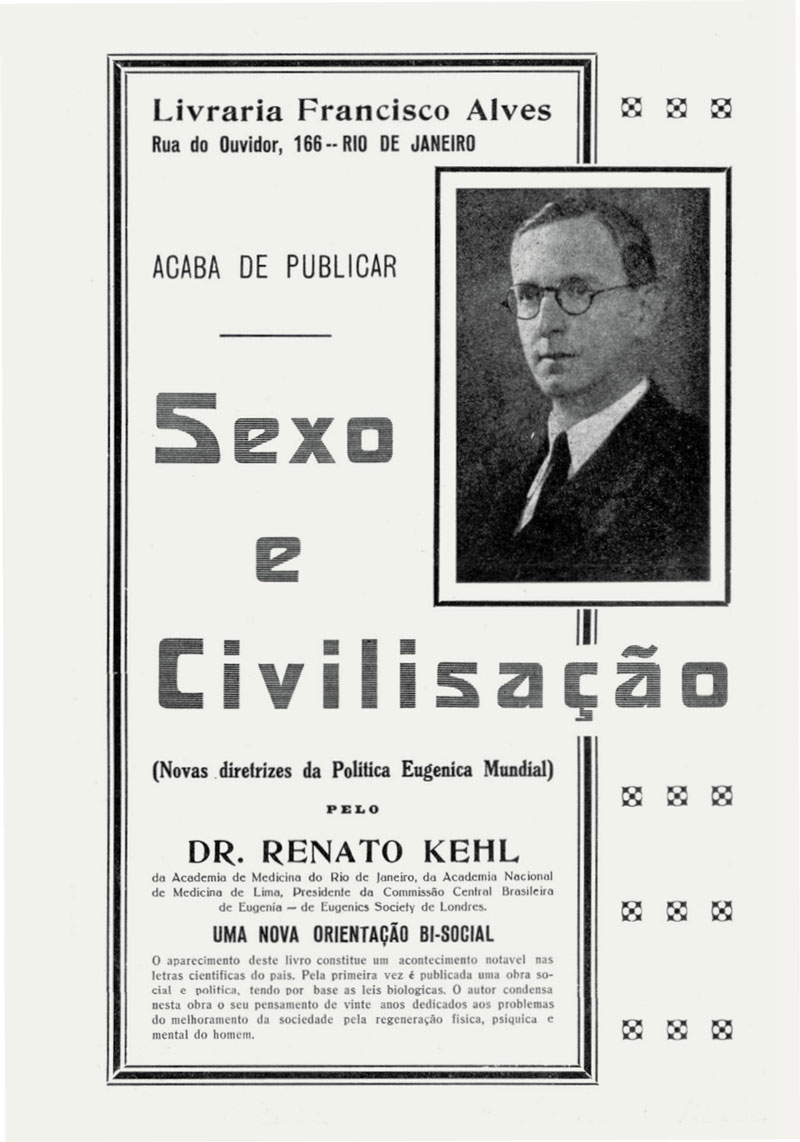
Collection of the Oswaldo Cruz House / Oswaldo Cruz FoundationAdvertisement for a book by Renato Kehl published in 1933Collection of the Oswaldo Cruz House / Oswaldo Cruz Foundation
Between the late nineteenth century and the 1930s, several US states adopted eugenic measures, such as the castration of the mentally ill and criminals, under the guise of scientific legitimacy. In Brazil, the only eugenic policy openly supported by the federal government appeared in the 1934 Constitution, which endorsed “eugenic education,” based on the idea that racial improvement could be achieved through procreation among groups considered more evolved.
Other eugenic practices also occurred informally. “People who were not necessarily mentally ill, but simply poor and Black, were confined to asylums, where compulsory sterilization was sometimes performed,” reports Góes. “During the military regime [1964–1985], sectors of the Armed Forces, using universities and supported by the Rockefeller Foundation, created sterilization programs for poor women in the Northeast under the justification of birth control.” Similar practices occurred in other regions of Brazil, though on a smaller scale. According to the Parliamentary Commission of Inquiry (CPI) on Sterilization, established in 1992, 7.5 million women of reproductive age had been sterilized in Brazil since 1964.
More recent examples exist. In February 2018, Judge Djalma Moreira Gomes approved a request by Mococa prosecutor Frederico Liserre Barruffini to sterilize Janaina Aparecida Quirino, a homeless woman deemed unfit to raise children because she was poor and used drugs. The ruling was overturned by a higher court three months later, but only after the irreversible procedure had already been carried out.
“Eugenics still exists, but we should avoid trivializing the concept. It’s important to distinguish racism from eugenics so that each can be confronted appropriately,” argues Carvalho. “It’s a very difficult idea to eradicate, because modern society is built on an ongoing pursuit of individual improvement.”
The story above was published with the title “Controversial approach” in issue 357 of November/2025.
Scientific articles
DUARTE, Z. et al. As raças humanas e a responsabilidade penal no Brasil. Gazeta Médica da Bahia. Vol. 72, no. 2. 2006.
JACOBINA, R. et al. Nina Rodrigues, epidemiologista: Estudo histórico de surtos de beribéri em um asilo para doentes mentais na Bahia, 1897–1904. História, Ciências, Saúde. Vol. 3, no. 1. Mar.–June, 2001.
FERRETTI, S. F. Nina Rodrigues e a religião dos orixás. Gazeta Médica da Bahia. Vol. 76, no. 2. 2006.
MONTEIRO, F. O “racialista vacilante”: Nina Rodrigues e seus estudos sobre antropologia cultural e psicologia das multidões (1880-1906). Topoi. Vol. 21, no. 43. pp. 193–215. Jan.–Apr. 2020.
GÓES, W. L. A eugenia entre os séculos XX e XXI: Uma discussão necessária. Revista Brasileira de História. Vol. 43, no. 94. 2023.
Books
LIMA, E. O velho e novo “Nina”. Bahia: Empresa Gráfica da Bahia, 1979.
GÓES, W. L. Racismo e eugenia no pensamento conservador brasileiro: A proposta de povo em Renato Kehl. São Paulo: LiberArs, 2015.
CARVALHO, L. D. de. Um maranhense intérprete da miscige(nação): Raimundo Nina Rodrigues e a formação racial brasileira (1862-1906). Maranhão: Editora da Universidade Estadual do Maranhão, 2025.