Conference in Belém also aims to raise annual climate funding to US$1.3 trillion
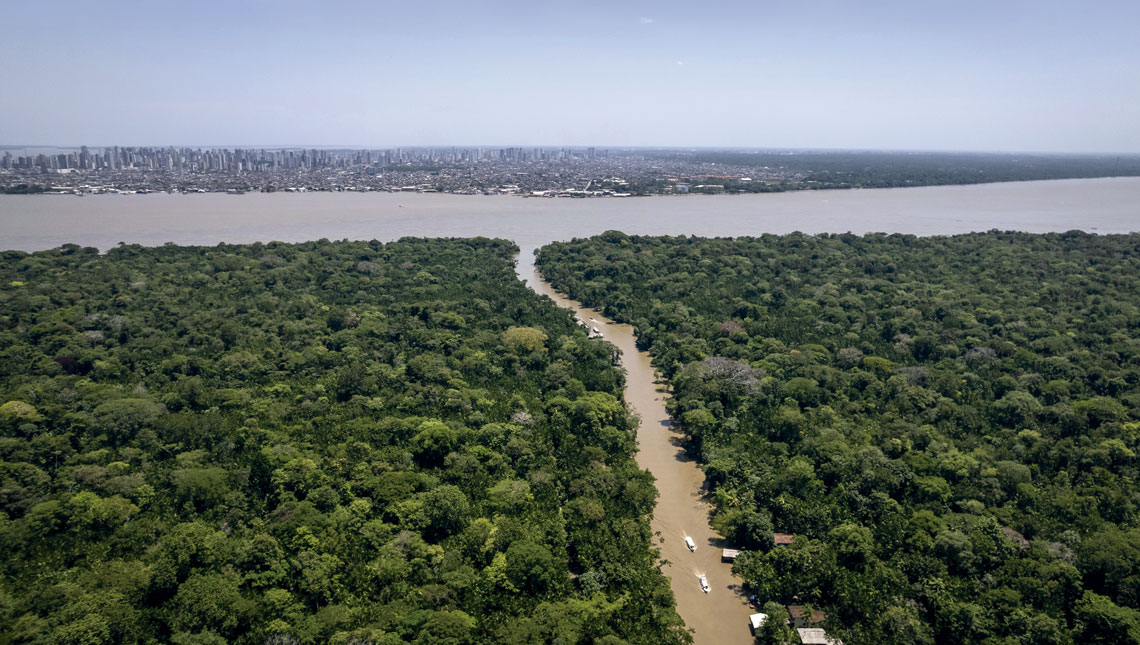
A view of Belém, the city in northern Brazil hosting COP30 from November 10 to 21
Anderson Coelho / Getty Images
Two major and interconnected issues are set to shape discussions at the 30th Conference of the Parties, or COP30, to be held in Belém, northern Brazil, from November 10 to 21. At stake are updated greenhouse gas (GHG) emissions reduction targets and a push to scale up climate finance for developing nations.
The first issue strikes at the heart of the Paris Agreement and its goal to limit warming to 2 degrees Celsius (°C)—ideally 1.5 °C—above late-nineteenth-century temperatures. As of mid-October, just 62 countries—fewer than one-third of Paris Agreement parties (among them Brazil)—had officially filed updated voluntary GHG reduction pledges for 2035. These pledges are known as Nationally Determined Contributions (NDCs).
Although the United States—historically the world’s largest GHG emitter—updated its NDC in 2024 under President Joe Biden, it remains unclear whether any US delegation will attend COP30. President Donald Trump, a strong proponent of fossil-fuel-driven growth, announced earlier this year that the US would exit the Paris Agreement.
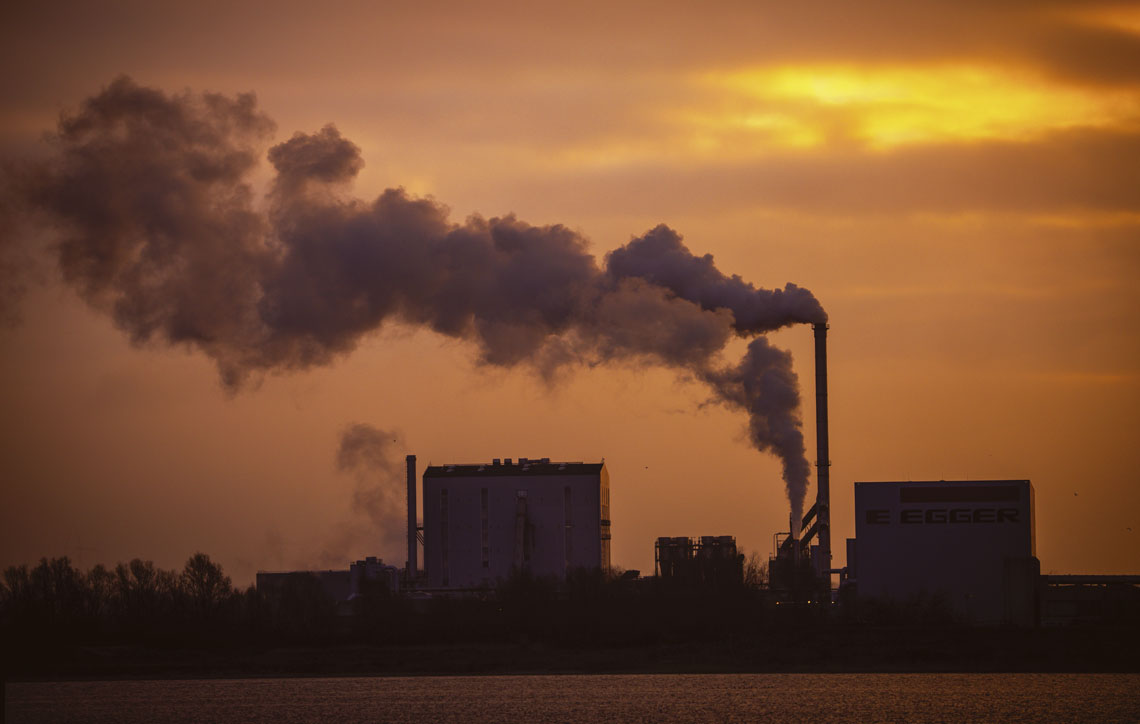
Roughly 70% of global GHG emissions come from burning fossil fuels such as oil, gas, and coal. Agriculture and land-use change—such as felling trees to clear land for pasture and crops—produce about 20% of the world’s warming gases. In Brazil, the pattern flips: nearly 70% of emissions stem from land-use change and agricultural activities.
1.3 trillion dollars per year is the amount developing countries are seeking for climate finance
Without the world’s largest economy at the table, the road ahead becomes even more challenging. A United Nations report released last October estimates that global emissions would need to drop 42% by 2030, relative to 2019 levels, to keep warming under 1.5 °C. If the target year is rolled forward to 2035, the required reduction rises to 57%. Additional assessments of countries’ latest NDCs are expected to be released before COP30 opens.
“Back in 1992, at the Rio Earth Summit, we said we needed to think globally and act locally. That is no longer enough,” said Marina Silva, Brazil’s minister of Environment and Climate Change, speaking at a press conference in Brasília following an event in the lead-up to COP30. “Extreme weather events now demand that governments—and all of us—act both locally and globally in terms of resources, technology, and solidarity. Climate change has no borders.”
Yuan Hongyan / VCG via Getty Images Industrial activities release pollutants that heat the atmosphereYuan Hongyan / VCG via Getty Images
The second core issue at COP30 is the limited pool of international finance available to help developing nations transition to a low-carbon economy. This includes reducing GHG emissions, expanding clean-energy capabilities, and adapting to climate impacts. At COP29 last November in Baku, Azerbaijan, wealthy nations agreed to raise annual climate-finance transfers to developing countries to US$300 billion—three times the earlier commitment. But that sum remains far below the US$1.3 trillion per year that poorer nations are asking for.
COP30 president André Corrêa do Lago admitted in an October interview with CNN Brasil that these funding levels will not be achieved in Belém. He noted that, while difficult, multilateral banks could potentially double or triple their climate-lending capacity, and private-sector investments in developing nations could grow 25-fold.
In late September, Brazil proposed establishing a Tropical Forest Forever Facility (TFFF) dedicated to preserving tropical forests such as the Amazon and the Atlantic Forest, in South America, and the dense tropical forests in the Congo Basin and Southeast Asia. Brazil pledged roughly US$1 billion to the TFFF and hopes to raise an additional US$25 billion for the fund over the next several years. One-fifth of all funds would go directly to Indigenous peoples and local forest communities.
No solid evidence indicates that global emissions are on track to be cut in half in the short term, as many studies recommend. Quite the opposite. Only in rare years—such as 2020, at the height of the COVID-19 pandemic—has the world avoided setting new records for carbon dioxide (CO2), methane (CH4), and nitrous oxide (N2O) emissions. Together, these three gases account for nearly all greenhouse-gas emissions (see chart below).
Alexandre Affonso / Pesquisa Fapesp
An October 2025 press release from the World Meteorological Organization (WMO) announced that all three gases hit record highs last year. The concentration of CO2, the most significant warming gas, reached 423.9 parts per million (ppm), 51% higher than preindustrial levels. Its increase from 2023 to 2024 was 3.5 ppm—the fastest annual rise since modern measurements started in 1957.
“At best, we might see a 3% reduction in emissions by 2030,” says climatologist Carlos Nobre, a senior researcher at the University of São Paulo’s Institute for Advanced Studies (IEA-USP). Nobre, who has taken part in seven COPs, plans to attend COP30 in Belém in November. “But at the pace we’re going, we’re likely to hit 1.5 °C of persistent warming within five to ten years.” In 2024—the hottest year in recent history—Earth’s average temperature exceeded that threshold for the first time. In 2025, global warming sits at roughly 1.4 °C, according to data from the European Union’s Copernicus Climate Change Service (C3S).
No COP has ever been hosted in Brazil. In Latin America, previous COPs have been held in Argentina (twice), Peru, and Mexico. Established in 1995, COP is the main annual conference on climate policy under the UN Framework Convention on Climate Change (UNFCCC), an overarching climate treaty that encompasses both the Paris Agreement and its predecessor, the Kyoto Protocol. The “Parties” in COP’s formal name refer to the 197 countries, plus the European Union, that hold seats and voting rights in negotiations (see glossary).
Alexandre Affonso / Pesquisa Fapesp
COP30 in Belém is also the first ever held in the Amazon—the world’s largest tropical rainforest region. At least symbolically, it contrasts with the previous two COPS, both hosted by countries whose economies rely heavily on oil and natural gas. Before COP29 in Baku, Azerbaijan, COP28 was held in 2023 in Dubai, in the United Arab Emirates.
The COP venues, including Parque da Cidade in Belém, are organized into two main areas: a Blue Zone and a Green Zone. The Blue Zone is restricted to official delegations, heads of state, observers, and accredited media. The Green Zone is managed by the host nation and houses events led by civil-society groups, companies, and other organizations. Activities there include national and thematic pavilions, exhibitions, and scientific discussions. Additional side events will take place around Belém in areas informally known as Yellow Zones. FAPESP representatives will participate in events across all three zones, including events organized by the Foundation itself and by partner institutions. Brazil’s Ministry of Science, Technology, and Innovation (MCTI) will host the “House of Science” at the Emílio Goeldi Museum of Pará. The venue will showcase research findings on climate change.
70% of global greenhouse-gas emissions come from burning oil, natural gas, and coal
COP resolutions are adopted by consensus among national delegations. There are no majority votes where one side prevails. “It’s a slow-moving but necessary process based on multilateralism and entirely dependent on negotiation,” says agricultural engineer Jean Ometto from the Brazilian National Institute for Space Research (INPE), who serves as deputy coordinator of the Brazilian Network for Global Climate Change Research (Rede Clima). “Climate change is a global problem. It’s not enough for one or two countries to take action against global warming. Everyone has to do their part.”
Climatologist José Marengo—head of research and development at the Center for Natural Disasters Monitoring (CEMADEN) and a member of the adaptation council advising the COP30 presidency—has his own way of describing the event. “It’s not a meeting about climate,” he says. “It’s a negotiation conference, and negotiating happens not only in formal sessions but over coffee breaks and often well into the night.”
Jens Büttner / Picture Alliance via Getty Images A sea of solar panels in Yinchuan, China—the country leading global growth in renewable energy capacityJens Büttner / Picture Alliance via Getty Images
Speaking at a pre-COP press conference in Brasília in mid-October 2025, Ambassador Corrêa do Lago noted that only in the final days of the conference in Belém will we know what kinds of consensus have been established. “COPs are always suspenseful,” he says. At last year’s COP in Baku, for instance, the deal to increase annual climate-finance funding to US$300 billion was struck only after midnight on November 24—more than a full day past the official closing time.
“There’s typically a substantial diversity of views on how quickly the energy transition should happen and how adaptation efforts should be financed,” says mathematician Thelma Krug, chair of the COP30 Scientific Council and a member of FAPESP’s Board of Trustees. “We know that as long as there’s demand for oil, producing and exporting countries will continue extracting it. Achieving certain kinds of consensus is extremely difficult.”
Alexandre Affonso / Pesquisa Fapesp
To illustrate how difficult it can be, it was only in 2023, at the COP in Dubai, that a consensus text finally acknowledged that climate change is caused by fossil fuels. Science had confirmed that fact long ago. It was also only at the COP in the United Arab Emirates that negotiators, for the first time, explicitly argued that a transition toward greater renewable energy adoption was necessary. Still, no timeline was established for phasing out oil, gas, or coal.
Many researchers note that climate-change adaptation has taken on a growing role in recent COPs. “Up until a few years ago, the conversations centered almost entirely on mitigation—what steps should be taken to cut greenhouse-gas emissions,” explains oceanographer Regina Rodrigues of the Federal University of Santa Catarina (UFSC), who has attended the last four COPs. “Now, mitigation and adaptation are both on the negotiating agenda.”
She notes that some groups were once reluctant to put too much emphasis on adaptation, particularly measures to alleviate climate impacts in developing countries, which are more vulnerable to those effects. Doing so risked being seen as deviating from the Paris Agreement’s core mission: cutting GHG emissions, the main driver of global warming. But as climate extremes have become increasingly palpable over the past decade, mitigation and adaptation have come to be understood as mutually complementary—and equally essential.
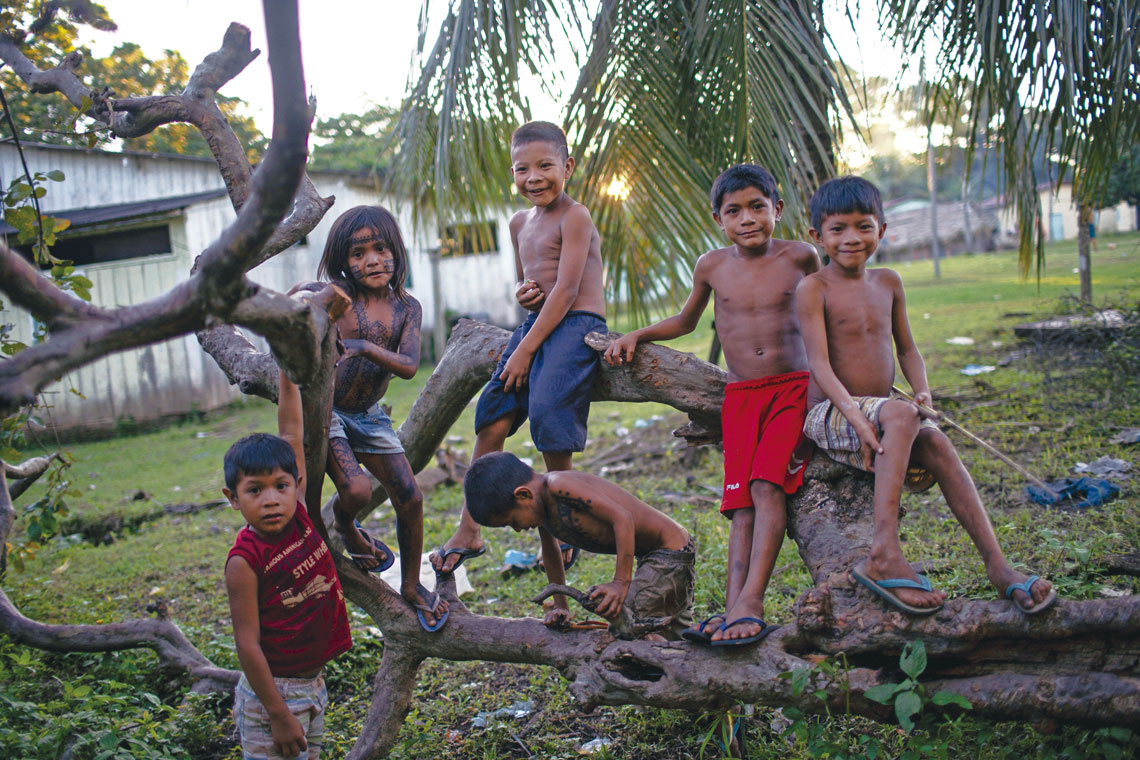
Mauro Pimentel / AFP via Getty ImagesIndigenous children in the Amazon—local communities must have a voice at the climate conferenceMauro Pimentel / AFP via Getty Images
Miriam Garcia, senior climate-action manager at WRI Brasil, a civil-society research organization headquartered in the US, says there is growing expectation that COP30 will finally define the 100 indicators for the Global Goal on Adaptation (GGA). Those indicators will inform international initiatives—and financing flows—to strengthen countries’ resilience and ability to adapt to climate change, particularly among the most vulnerable nations. Some of the high-level measures being advanced under the GGA include the development of national adaptation plans by 2030 and initiatives to provide healthcare services and reliable access to water and food for affected populations.
Although envisioned when the Paris Agreement was adopted in 2015, a more detailed agenda for the GGA has yet to be finalized. “Brazilian diplomacy is very skilled, and we’re hopeful that Belém will produce a consensus around these metrics,” says Garcia, who holds a master’s and PhD in international relations with a focus on climate policy and has attended six COPs as an observer.
One encouraging sign for negotiators in Belém is that, even without a set date to end fossil-fuel extraction, the global energy transition is moving forward. In 2024, the world added 582 gigawatts of renewable-energy capacity—a 15% jump from the previous year. That’s a record increase, according to a report from the COP30 presidency, the International Renewable Energy Agency (IRENA), and the Global Renewables Alliance (GRA). The downside: to meet the target agreed at COP28 in 2023, the sector will need to add 1,122 gigawatts every year from 2025 through 2030.
The story above was published with the title “The challenge from Belém” in issue 357 of November/2025.
This article may be republished online under the CC-BY-NC-ND Creative Commons license. The Pesquisa FAPESP Digital Content Republishing Policy, specified here, must be followed. In summary, the text must not be edited and the author(s) and source (Pesquisa FAPESP) must be credited. Using the HTML button will ensure that these standards are followed. If reproducing only the text, please consult the Digital Republishing Policy.