Redação
Genetics
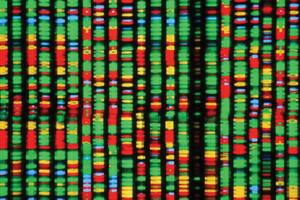
The most complete human genome
On May 27, the T2T consortium, an international collaboration involving 30 research institutions, published an article titled “The complete sequence of a human genome” on bioRxiv
By Redação
Zoology
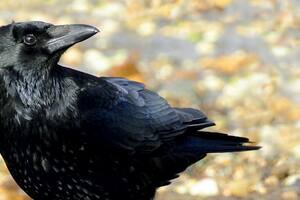
The crows and the empty set
With training, carrion crow were able to understand the empty set as a null numerical quantity close to one
By Redação
diversity

The NIH’s plan to combat racism
Francis Collins, director of the NIH introduced UNITE, a program launched to combat structural racism and increase diversity, equity, and inclusion
By Redação
Paleontology

The near extinction of sharks
Ocean sediment fossil records suggest that today's sharks are descended from the few survivors of a mass extinction that wiped out nearly all the shark species that lived in the early Miocene Epoch
By Redação
Biology
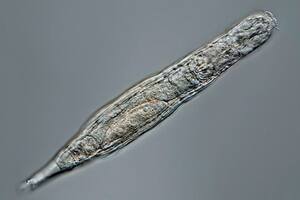
Back to life after 24,000 years
Rotifers of the Bdelloidea class are multicellular invertebrate organisms so small that they are usually only seen under a microscope
By Redação
Innovation
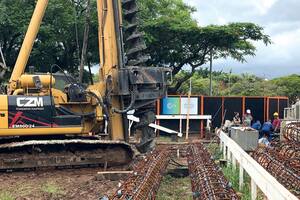
Earth-controlled temperature
A technology developed at the São Carlos School of Engineering of the University of São Paulo uses heat exchange between the subsoil and the foundation piles to acclimatize a building's interior
By Redação
Astrophysics

The oldest spiral galaxy
Astrophysicists have identified the oldest spiral galaxy ever observed
By Redação
Zoology
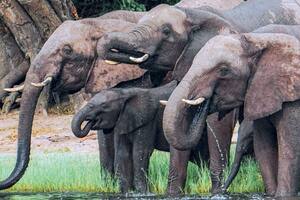
A giant water and food vacuum
African elephants are able to fill their nostrils with 3.7 liters of water in just 1.5 seconds
By Redação
Good practices
Academy expels researchers for sexual harassment
The US National Academy of Sciences (NAS) has expelled researchers accused of sexual harassment
By Redação
Good practices

The weight of academic misconduct in German politics
Academic misconduct has become a sensitive political issue in Germany, the European Union country with the highest percentage of members of parliament that have a doctorate, at 17%
By Redação
Photolab
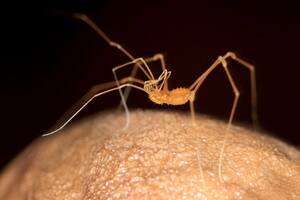
The harvestman with eight canes
Of all the harvestman species found in Brazil, Giupponia Chagasi is the best adapted to living in caves—a trait known as troglomorphism
By Redação
Video
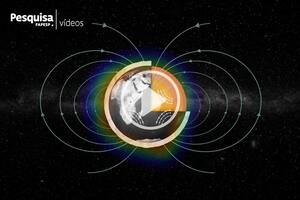
A weak spot on Earth’s magnetic field hovers over Brazil
Learn how the planet's invisible shield works, and what is the South Atlantic Anomaly | 3'34
By Redação
COVID-19

Risk of death is higher among the poor in Chile
People under 40 living in poorer municipalities in the Metropolitan Region of Santiago, Chile, are 3.1 times more likely to die from complications associated with COVID-19 than those who live in more affluent regions
By Redação
COVID-19
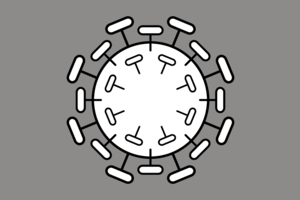
Lasting consequences
People who survive SARS-CoV-2, even those not hospitalized, can suffer the effects of the infection for months after the most intense symptoms subside
By Redação
COVID-19

The virus and the loss of smell
The loss of smell that affects up to two-thirds of people infected with SARS-CoV-2 is a consequence of both the direct action of the virus and the inflammation it triggers in the olfactory system, according to a team of researchers
By Redação
COVID-19
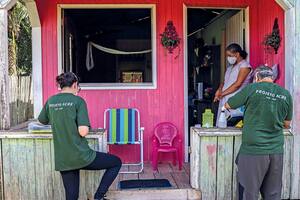
Dengue increases risk of COVID-19 symptoms
The risk of developing COVID-19 symptoms when infected with the novel coronavirus is twice as high among individuals who have had dengue in the past
By Redação
Covid-19

Mask effectiveness tests
Researchers compared the quality of 227 types of face masks sold in Brazil, measuring their ability to block the novel coronavirus
By Redação
Zoology

Toads in the mist
In well-preserved remnants of the Atlantic Forest, a team of zoologists identified a peculiar new species of toad
By Redação
Archaeology

78,000-year-old human burial
The oldest known burial by modern humans in Africa took place about 78,000 years ago
By Redação
Education

More inclusive universities
Access to university education has expanded and is less socially unbalanced in Brazil
By Redação
Education

New UNIFESP dean sworn in
On May 7, obstetrician Nelson Sass and sociologist Raiane Patrícia Severino Assumpção officially took over as dean and vice dean of the Federal University of São Paulo (UNIFESP) for 2021–2025
By Redação
Funding
Direct funding to Africa
In April, African health experts published an open letter in the journal Nature Medicine, addressed to international funders of studies on health problems in Africa
By Redação
Geology

In the depths of a geyser
For the first time, geoscientists from the University of Utah and Yellowstone National Park, USA, have mapped the interior of the world's most powerful geyser
By Redação
Tecnology

Writing with the mind
A brain-to-computer interface has allowed a 65-year-old man paralyzed from the neck down to quickly write text on a computer screen by imagining himself writing the letters by hand
By Redação
Engineering
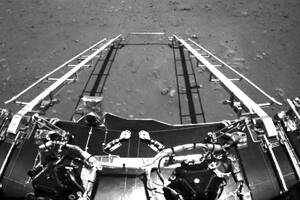
Chinese rover on Mars
Without a fanfare, China’s National Space Administration successfully landed its first rover on Mars
By Redação
Zoology
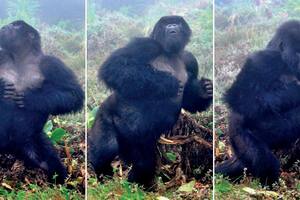
A very informative gesture
Mountain gorillas may be communicating with other members of their troop when they rise up on their hind legs and beat their chests with their hands to produce a loud, hollow sound
By Redação
History

Population decline in pre-colonial Amazonia
In response to environmental changes, epidemics, or wars, the populational decline of the Amazon region may have started 300 to 600 years before contact with European settlers
By Redação
Data

Invention patents filed by universities in São Paulo
Percentage of all invention patent applications filed with the Brazilian Patent Office by legal entities in São Paulo that were submitted by higher education institutions, per quadrennium
By Redação