Printed


Economics

Tools for an equitable society
Economists study how social investment and progressive taxation combat different types of inequality, and how they can be integrated
By Diego Viana
Biotechnology

Clothes made of bacteria
Biofabrics made from microbes are crawling their way into the fashion industry
Materials engineering
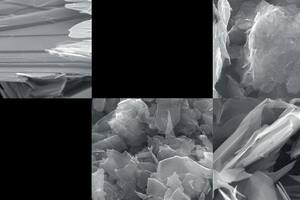
Homegrown graphene
Graphene production facilities in Brazil’s Southeast and South place the country among the global producers of the high-tech material
Atmospheric sciences
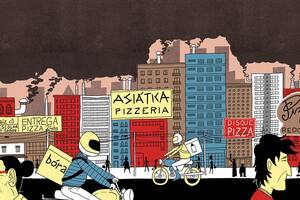
Pizza soot
Pizzerias in São Paulo produce the equivalent of 9% of the fine particulate matter emitted by vehicles in the city’s Metropolitan Region

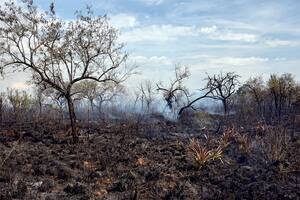
Interview

Carlos Guerra Schrago: The theory and practice of evolution
The discipline that seeks to reconstruct the histories of species is itself evolving, according to UFRJ biologist
By Fabrício Marques and Maria Guimarães

Interview

Luiz Eugênio Mello: Even something good has room for improvement
The new scientific director of FAPESP on his plans and the challenges for research as a result of the pandemic
By Fabrício Marques, Neldson Marcolin and Alexandra Ozorio de Almeida
Coronavirus

Research during the quarantine
“I put my epidemiologist’s hat back on” Three years ago, I became dean of the Federal University of Pelotas and pressed the pause button on my scientific life in order to dedicate myself 100% to leading the university. Until the new coronavirus pandemic began, that is. I was wearing my dean’s hat, but I couldn’t... View Article
By Redação


Retrospect

In the palm of the hand
A São Paulo physician developed a portable respirator in the 1950s
Cover
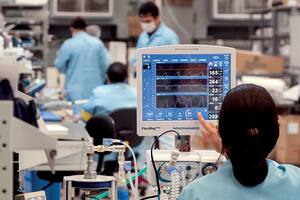
Vital ventilators
Brazil’s hospitals scramble to buy ventilators for ICUs, while a FAPESP-supported firm closes a deal to supply 6,500 units to the Brazilian Ministry of Health
By Yuri Vasconcelos and Frances Jones



Cover

Science fights back
In just four months, 8,000 scientific articles have been published on Covid-19, more than 70 drugs tested against SARS-CoV-2, and the first vaccines trialed on humans
By Redação
Public health

Banning travel alone will not stop the pandemic
Public health actions, such as early testing, washing hands, social distancing, and self-isolation are likely to be more effective in reducing the transmission rate of the SARS-CoV-2 virus than simply reducing national and international travel
By Redação
Pharmacology

Monkeys are the best animal model
Monkeys appear to be the best animals for testing SARS-CoV-2 vaccines and drugs
By Redação
Covid-19
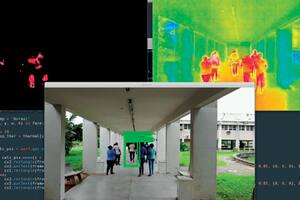
Thermal camera identifies fever from a distance
Researchers developed a drone equipped with a thermal camera capable of measuring a person’s temperature from a distance
By Redação
Covid-19

The ideal fabric for homemade masks
A mixture of cotton and natural silk or chiffon is the best combination for making homemade masks capable of blocking the SARS-CoV-2 virus
By Redação
Coronavirus

Virus on the attack
Transmission electron microscope images provide a detailed look at how SARS-CoV-2 attacks, infects, and replicates in a culture of Vero cells
By Redação
Chemistry
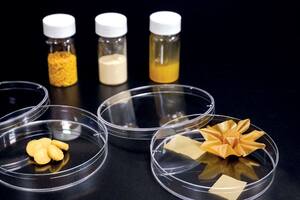
Paper and sponge made from pollen
Researchers transformed grains of sunflower pollen into a microgel with controllable properties and synthesized products with consistencies of gel, paper, and sponge
By Redação
Archaeology

The new dimensions of Ur
Ur may have occupied an area up to eight times greater than previously estimated by archaeologists in the 1980s
By Redação
