Printed
ONMC

Scientists renounce national honor
In an open letter, 21 scientists awarded this year’s National Order of Scientific Merit renounced the honor
By Redação
Geology

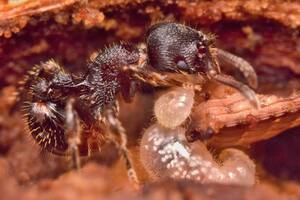
Exoplanets with exotic rocks
The rocky planets orbiting stars outside our Solar System may have a very different chemical composition to Earth
By Redação
Biodiversity

The great ocean fertilizers
Whales are the largest living beings on the planet and play an important role in recycling ocean nutrients
By Redação
Data

Public R&D funding in São Paulo
A FAPESP survey on R&D activities carried out in São Paulo in 2018 offers a precise distinction between who funds and who conducts R&D in the state, and how much the government contributes at different levels The graphs above show that the business sector conducts the most R&D, but the government sector contributes just as... View Article
By Redação
Good practices

Integrity in times of open science
The sixth Brazilian Meeting on Research Integrity and Ethics in Science (BRISPE) was held between October 28 and 29, with discussions on how to encourage ethical behavior and scientific integrity in an environment marked by increasing collaboration, open access to knowledge, and data sharing—generally encompassed by the term “open science.” More than one hundred participants,... View Article
By Redação
Good practices

Academic papers for sale
Essay mills could be made illegal in the UK in a bid to combat widespread fraud in remote learning
Letter from the editor | 310

Capturing subtleties
Brazil is known for producing more clean energy than the average country. In 2019, 46% of its electricity came from low-carbon sources, compared to 16% worldwide (and 26% in Europe). The majority of this renewable, nonpolluting energy is produced by more than 200 hydroelectric power plants that generate two-thirds of the electricity consumed nationwide. The... View Article
photolab
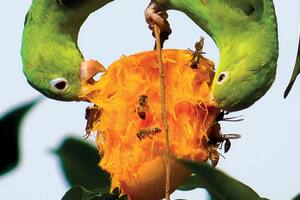
Under the feathers
To study the diversity and evolutionary history of parasites in birds, Bruno Fermino teamed up on expeditions with fellow ornithologists: some interested in birds, others in the creatures that live inside them. He thus had the opportunity to photograph species such as the yellow-chevroned parakeet (Brotogeris chiriri)—the picture above was taken in Santana do Araguaia,... View Article
By Redação

Careers

Time to face the numbers
Economic crisis and high unemployment rate boost the number of FIES debtors

Economics

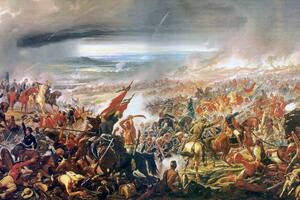
In practice, the theory is different
New research examines the ideas and policies of Republican Brazil's finance ministers
By Diego Viana
Materials engineering
The power of copper
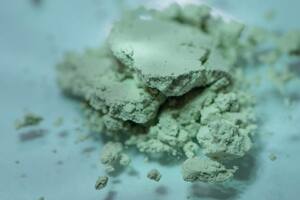
Copper nanoparticles can be used to create biocidal fabrics and agricultural pesticides
By Suzel Tunes
Nuclear medicine

Radiopharmaceuticals under threat
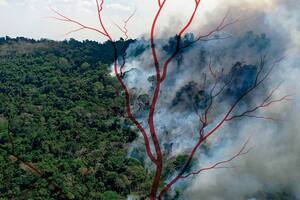
Radiopharmaceutical crisis leads to debate over production model
HEALTH
Pioneering immunization
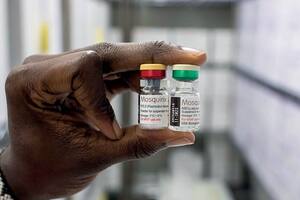
Malaria vaccine recommended for children in Africa by the WHO is the first to protect humans from a parasite
By Tiago Jokura
Ecology
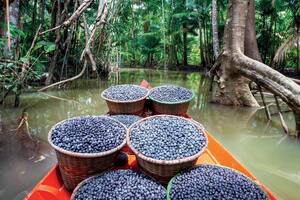
Green deforestation
Intensive açaí management threatens biodiversity in Amazonian estuarine forests
By Tiago Jokura

Scientific initiation
An exercise in curiosity
São Paulo private school science fair attracts projects from other regions and abroad
Higher education

Turbulence on the horizon for postgraduate education
Uncertainties arise as assessment of Brazilian graduate programs goes to court