Printed
Archaeology

New glyphs found in the Peruvian desert
Archaeologists from Japan have identified 143 new drawings—or geoglyphs—of animals, plants, and people in the Nazca desert, near the coast of Peru
By Redação
Biology
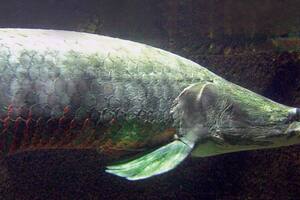
Pirarucu scales form a special armor
The composition and structure of pirarucu scales make them highly resistant to punctures and tension
By Redação
Physics

Science personalities 2019
Brazilian physicist Ricardo Galvão features on the journal Nature's list of the ten most influential people in science in 2019
By Redação
Geology
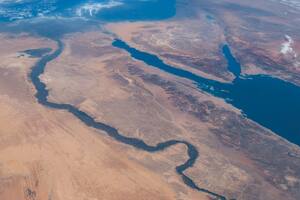
Why the Nile is so unchanging
The Nile has followed the same path in North Africa for almost 30 million years
By Redação
Foundation

FAPESP appoints new scientific director
Neuroscientist Luiz Eugênio Araújo de Morais Mello has officially been appointed scientific director of FAPESP by the governor of São Paulo, João Doria
By Redação
Genetics

Understanding the Brazilian genome
Researchers launched an initiative with the aim of mapping the genome of 15,000 Brazilians aged 35–74
By Redação
Astronomy

Probe reveals origin of solar winds
The Parker Solar Probe space probe has been closer to the Sun than any other manmade object, and it is expected to get even closer over the next seven years of its mission
By Redação
Photolab
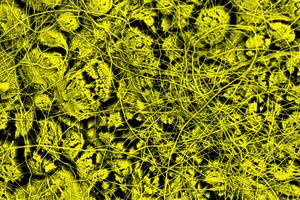
Technological skin
Shark's skin feels smooth if you run your hand from head to tail, but rough in reverse
By Redação
Letter from the editor | 287

Calcium for tomatoes
Agriculture’s advance in Brazil is directly linked to scientific and technological research in the sector. The Agronomic Institute of Campinas was created in 1887, and the country’s first master’s thesis defended in 1961 at what is now the Federal University of Viçosa, was in the field of agronomic engineering, on the effects of irrigation and... View Article
By Redação
Literature

Monteiro Lobato and the book-selling machine
Research based on new documents revisits the writer's contribution to Brazilian editorial history
By Luisa Destri

Aeronautical engineering
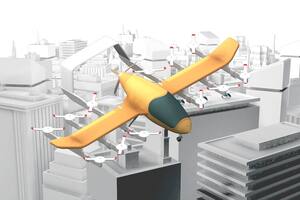
The arrival of flying cars
Development of eVTOLs advances in Brazil and around the world
Pesquisa Fapesp 20 Years
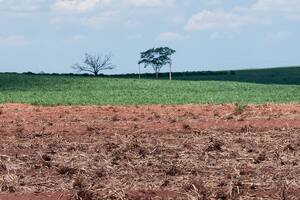
The challenge of generating bioenergy
Pesquisa FAPESP covered the efforts of Brazilian science to make viable the use of sugar sector byproducts for producing electricity and 2G ethanol
Molecular biology
Sugarcane mapped
A team coordinated by Brazilian scientists finds over 370,000 genes when sequencing a commercial cultivar of the plant

Environment
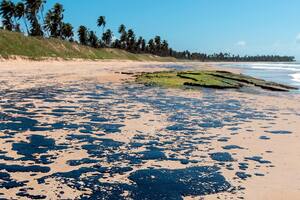
Oil spill spreads
Analysis suggests three potential sources of the oil near the Brazilian coast

Funding

In defense of science
Party leaders propose research funding as a means to overcome economic crisis

Scientific production

The race to measure impact
Brazilian universities increasingly investing in offices dedicated to managing and measuring performance
Graduate education

5-dimensional benchmarking
CAPES unveils a new, more comprehensive and diverse set of quality metrics for master’s and doctoral programs


Paleontology

The predator with voracious jaws
A fossil discovered in Rio Grande do Sul is the best-preserved representative of the herrerasauridae, one of the first strains of carnivorous dinosaur
By Redação
Geology
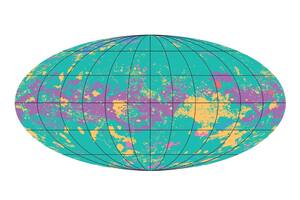
Titan’s landscape
Of all the celestial bodies in our solar system, Titan, Saturn's largest moon, has the most similar geology to Earth
By Redação