Biodiversity
biodiversity

South America’s Endangered Oases
With only 4% of their area protected, fog oases are threatened by urbanization, mining, increased air pollution, and off-road trails
By Redação

Biology
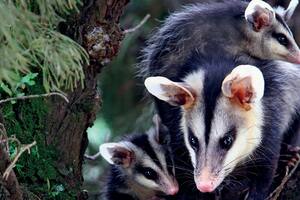
Rainforest marsupials
Study suggests opossums emerged in the Amazon about 40 million years ago

photolab
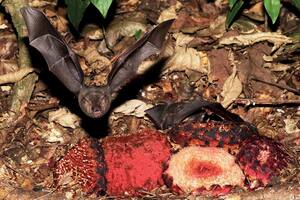
Unexpected feast
When biologist Felipe Amorim first questioned how the strange flowers of the Scybalium fungiforme are pollinated, he only knew one thing for certain: the evidence pointed to non-flying mammals. His infrared cameras later captured footage of possums, which came as quite a surprise—although they fit the description, they were not previously known to be pollinators.... View Article
By Redação
Biodiversity

Transplanting microorganisms reduces coral death
It may be possible to reduce coral death caused by ocean warming associated with climate change
By Redação
Economics
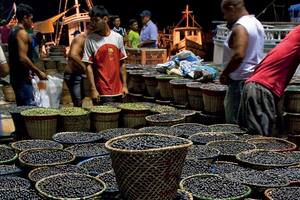
Drawing wealth from nature
How biodiversity can drive a new cycle of industrial development in Brazil
By Diego Viana
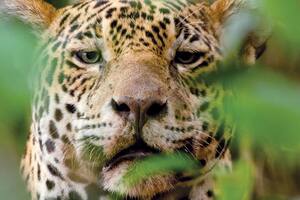
Biodiversity
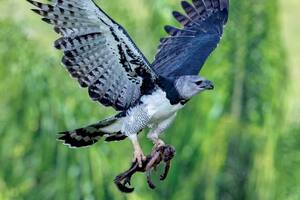
Deforestation and hungry harpy eagles
The largest eagle in the world, is disappearing from some regions of the Amazon as a result of deforestation
By Redação
Photolab

Invisible message
When stimulated with ultraviolet light, the cock-eyed squid (Histioteuthis sp.) becomes covered with bright red dots
By Redação
Video
Harpy eagles are disappearing from parts of the Amazon
Preys for the largest eagle on Earth dwindle in deforested areas | 1'58
By Redação
Zoology
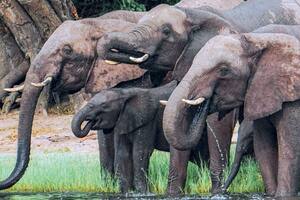
A giant water and food vacuum
African elephants are able to fill their nostrils with 3.7 liters of water in just 1.5 seconds
By Redação
Photolab
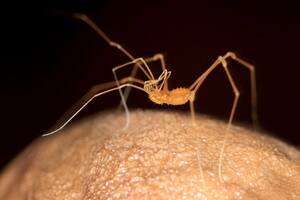
The harvestman with eight canes
Of all the harvestman species found in Brazil, Giupponia Chagasi is the best adapted to living in caves—a trait known as troglomorphism
By Redação
REGULATIONS
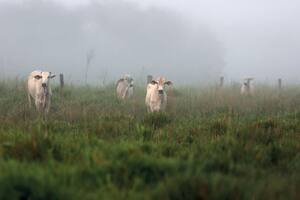
Weakened legislation
Brazil dismantling environmental protection structures during the pandemic
Zoology

Toads in the mist
In well-preserved remnants of the Atlantic Forest, a team of zoologists identified a peculiar new species of toad
By Redação
Video

These birds show how species arise
Ornithologist Luís Fábio Silveira, curator of the bird collections at the Zoology Museum of the University of São Paulo (MZ-USP), explains how studies with capuchino seedeaters help understanding their diversification by means of evolution | 5'46
By Redação
video

These nurseries can help to recover coral
Culture of damaged fragments onto 3D-printed cribs is a promising technology for restoring threatened reefs | 4'50
By Redação
Marine biology

Coral nurseries
Mobile cultivation of damaged coral in precast frames is a promising technology for rehabilitating reefs
By Tiago Jokura
Environment
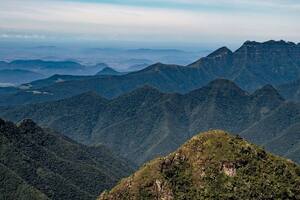
Hidden losses
The size of the Atlantic Forest has remained almost stable for 30 years, but old forest is losing ground to newer formations with lower biodiversity and carbon stock
By Suzel Tunes
Biodiversity

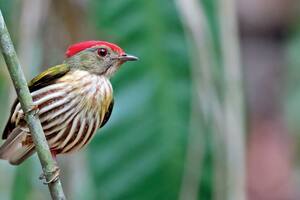
Damage beyond deforestation
Fragments of Atlantic Forest have already lost 23–42% of their biodiversity and forest carbon stocks
By Redação
Video
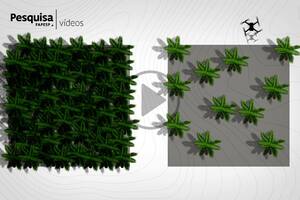
How drones chart forest biodiversity
Unmanned aerial vehicles are used to monitor tropical forests in a speedy, efficient and detail-rich manner | 4'34
By Redação
COVID-19

Vaccines and sharks
A compound extracted from the livers of sharks is used in five coronavirus vaccine candidates
By Redação
Biochemistry

Anti-predator chemical shield
Seemingly harmless at first glance, the African maned rat (Lophiomys imhausi) carries a lethal weapon in its coat
By Redação
Photolab

Underwater stars
When disturbed by a physical bump or a beam of light, the tunicates Pyrosoma atlanticum emit a turquoise light
By Redação
Biota - 20 Years
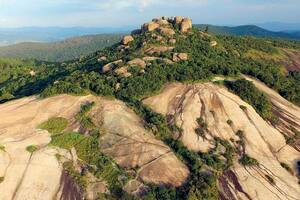
Policies for protecting nature
For two decades, the program's biodiversity research has provided a scientific foundation for creating conservation areas and increasing sustainable development in São Paulo
By Suzel Tunes
Ecology
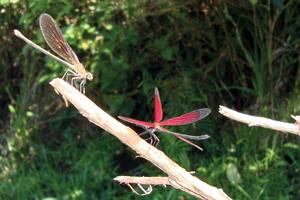
Under the female gaze
Males with brightly colored wings attract more females to their territory, as well as more rival males, sparking a fierce competition for mating partners
By Redação
BIOTA - 20 YEARS
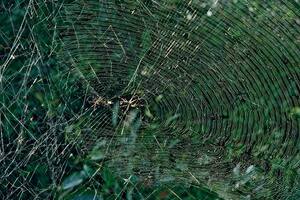
A poisonous weave
A spider web commonly found in the Americas is composed of toxins that paralyze and help kill prey

