Printed
Cover
The reality of data
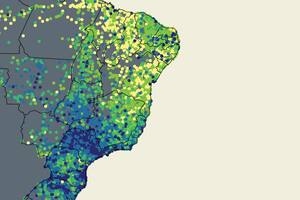
Mapping and systematizing COVID-19 data is crucial to controlling the disease in Brazil
By Redação
Covid-19
Traditional Chinese medicine to treat COVID-19
China's government and state media are encouraging the use of traditional medicines and remedies to treat COVID-19, despite the lack of scientific support
By Redação
COVID-19
Novel coronavirus can damage the retina
Ophthalmologists at the Federal University of São Paulo suspect that Sars-CoV-2, the virus that causes COVID-19, can damage the retina
By Redação
Covid-19
SARS-CoV-2 Tracker
In just two days, a group of Brazilian researchers designed and developed a cell phone application capable of reading the result (positive or negative) of a COVID-19 rapid test
By Redação
Covid-19
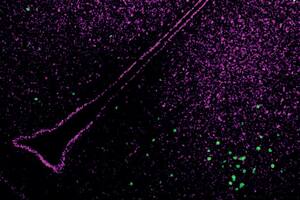
Growing lung cells
São Paulo–based startup TissueLabs has created a platform that mimics the environment of the pulmonary epithelium to allow scientists to study how the SARS-CoV-2 virus, which causes COVID-19, affects the lungs
By Redação
Covid-19
Self-isolation and city air
Self-isolation measures have cleared city streets, leading to a decrease in air pollution
By Redação
Astronomy
High-resolution moon
Researchers have produced the first detailed digital map of the Moon's entire surface
By Redação
Genetics
Gene affects the height of Peruvians
Genetic alterations may partly explain why Peruvians are one of the shortest peoples in the world
By Redação
Medicine
Gelatin optical fiber
Researchers used agar, a type of gelatin extracted from algae, to develop a biodegradable and biocompatible optical fiber
By Redação
Zoology
The bigger the tusk, the better
Biologists measured the tusks of 245 males collected in Greenland from 1983 to 2018 and concluded that the organ may play a role in sexual selection
By Redação
Foundation
Governor extends FAPESP director’s mandate
The governor of São Paulo, João Doria, reappointed Fernando Menezes de Almeida as administrative director of FAPESP for a further three years
By Redação
Biodiversity
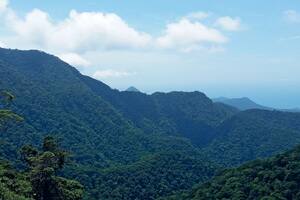
Reclusive and under threat
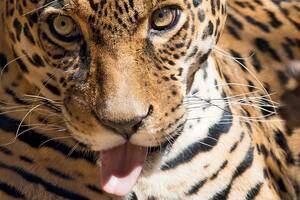
Deforestation is destroying the habitat of the timid and elusive short-eared dog, the only canid species endemic to the Amazon
By Redação
Data
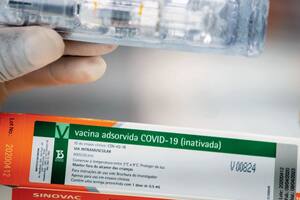
At least 125 COVID-19 vaccines are in development, with 10 already undergoing clinical trials
Vaccines in the clinical trials phase worldwide and in development in Brazil (as of May 27, 2020)
By Redação
Good practices
University to pay US$3.7 million to settle allegations of fraud
Rice University has agreed to pay US$3.7 million to the United States government to settle a lawsuit that accused its directors of violating rules on the use of funding from the National Science Foundation
By Redação
Good practices
Publishers team up to identify altered images
Major publishers of scientific journals worldwide have created a working group to create new standards and promote technologies capable of detecting manipulated or duplicate images in papers
By Redação
Letter from the Editor | 292
Crucial numbers
Little is known about viruses. Existing on the boundary between the living and the nonliving, they are found in all environments where there is life. Their effects on living beings can be beneficial, harmless, or capable of triggering devastating epidemics, such as Ebola, Zika, and now, SARS-CoV-2. Although the number of species is estimated in... View Article
Photolab
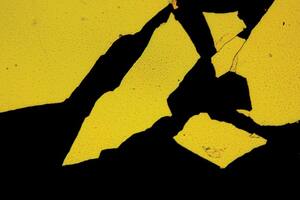
Graphene-coated microspheres
Light emitted by an optical fiber travels through the center of a glass microsphere and interacts with the graphene that coats its surface
By Redação
Economics
Tools for an equitable society
Economists study how social investment and progressive taxation combat different types of inequality, and how they can be integrated
By Diego Viana
Biotechnology
Clothes made of bacteria
Biofabrics made from microbes are crawling their way into the fashion industry
Materials engineering
Homegrown graphene
Graphene production facilities in Brazil’s Southeast and South place the country among the global producers of the high-tech material
Atmospheric sciences
Pizza soot
Pizzerias in São Paulo produce the equivalent of 9% of the fine particulate matter emitted by vehicles in the city’s Metropolitan Region