Understanding biological systems
February 19, 2021 2:34 pmBrazilian scientist creates new laboratory at US university to study biological systems
Brazilian scientist creates new laboratory at US university to study biological systems

Emerging field demands interdisciplinary collaboration and knowledge of both chemistry and physics
One hundred years after his birth, concepts formulated by economist Celso Furtado remain influential in multiple fields
The image of Tiradentes overcame the lack of visual records and became one of the most popular from Brazil’s history

Food insecurity challenges faced by Brazil, one of the largest agricultural producers in the world

Social technology developed at EMBRAPA and UFU offers new ways for rural and low-income communities to produce their own food

Companies supported by FAPESP’s RISB program are the target of acquisitions
A spider web commonly found in the Americas is composed of toxins that paralyze and help kill prey
Two IMPA mathematicians whose research has been recognized abroad may inspire girls who dream of careers in the exact sciences

Methane released by a saline lake may have caused a rise in temperature leading to the diversification of life forms on the planet

Gravitational waves reveal black holes of new sizes

A new survey provides detailed insight into the actors engaged in and funding R&D in São Paulo State
New survey confirms positive outcomes from FAPESP programs supporting small businesses, international collaborations, and researcher training

New formula to calculate the effects of investment in innovation

Researchers adapt to new personal data protection law
Epidemiologist warns that the pandemic cannot be described solely through the virus or the infection caused by it

Water, and to a lesser extent, fire, influence flora distribution and diversity in the Pantanal

Record fires destroy a quarter of the world’s largest floodplain and worsen the impacts of a prolonged drought
Studies suggest that children and adolescents do not spread SARS-CoV-2 any more than adults
Evidence that SARS-CoV-2 can infect the same person more than once is challenging our understanding of the virus and how we combat the disease

Advanced testing of COVID-19 vaccines continues at an accelerated pace, despite occasional interruptions caused by safety concerns

With a wide range of strategies adopted to slow the spread of the disease, some countries have fared better than others

Blood levels of a particular protein can indicate the severity of coronavirus infections and guide the response of the attending health care team

Universities in Australia are to receive extra funding to boost the country's economic recovery after the pandemic
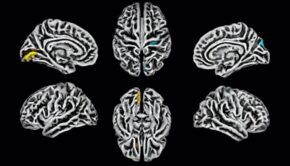
A study confirms that the novel coronavirus can infect different types of brain cells, and may be capable of directly damaging the brain
Four women were honored in three of the six Nobel Prize categories this year, the second-highest number in the history of the prestigious award

There is water on the Moon, and not only in the dark craters located near its poles

Archaeologists have identified a new geoglyph on the side of a hill in the desert between the Peruvian cities of Nazca and Palpa

Brazilian paleontologists have identified fossilized blood parasites in the back leg bone of a titanosaur that lived some 85 million years ago
The Center for Artificial Intelligence, an engineering research center funded by FAPESP was inaugurated on October 13 at the University of São Paulo